Biblical context from the land of Scripture. Built to equip pastors. Powered by donors who invest in the next generation.

Why Prophecy Matters

Biblical prophecy isn’t meant to confuse or divide believers—it’s meant to strengthen faith and point us to Jesus. In this series, Pastor Bob explores why God revealed the future in Scripture, how Israel fits into His unfolding plan, and what these promises mean for believers today.

Aged paper with twine, sage leaves, and dried lavender arranged on a rustic surface

Why Prophecy Matters | Part 1

Scripture’s future promises bring hope, fuel evangelism, and point us to Jesus Christ.

Watch Teaching

Why Prophecy Matters | Part 2

God’s promises to Israel reveal His faithfulness and the prophetic significance of modern events.

Watch Teaching

Why Prophecy Matters | Part 3

Israel’s global conflicts reveal the spiritual battle behind history and point to Christ’s return.

Watch Teaching

Walk the Bible: On Location

What happens when you open the Bible in the very places where its events unfolded? These short devotionals were filmed on location across Israel and Greece, offering reflections from the land itself and connecting Scripture to the places where God’s story took place.
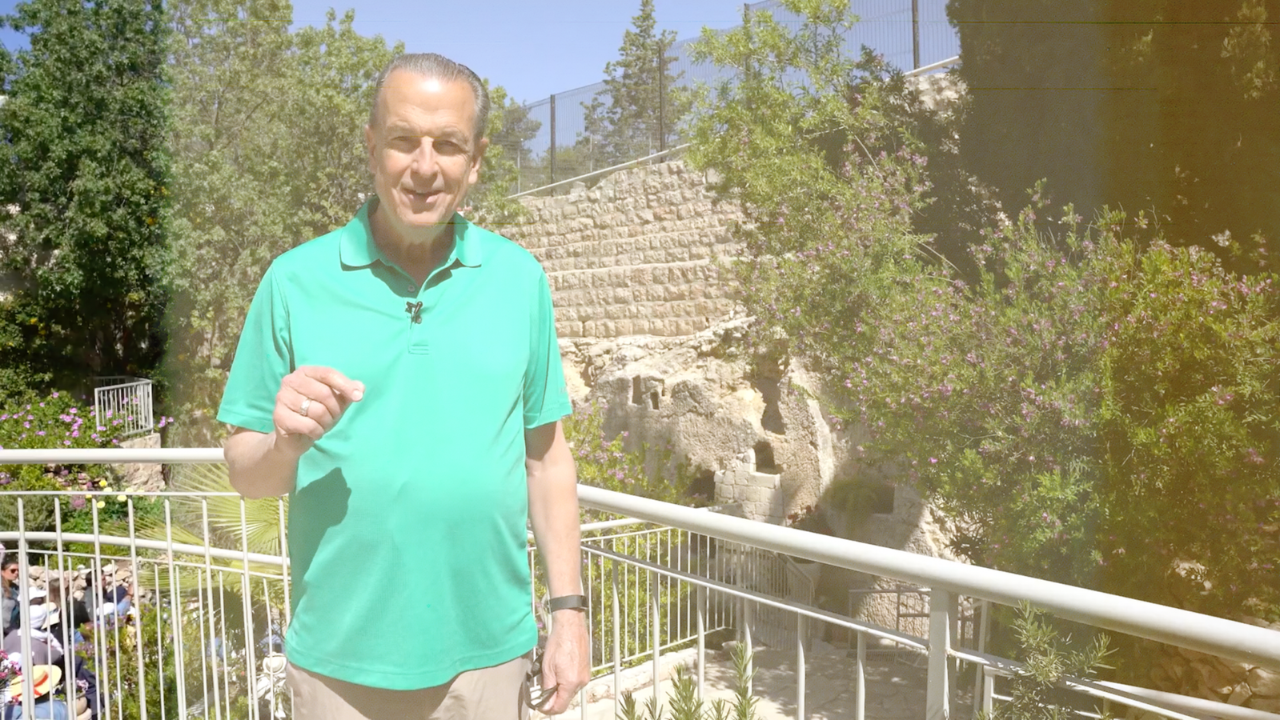
Screen capture of Pastor Bob teaching at the Garden Tomb in Jerusalem, Israel

Walk the Bible: On Location | Part 1

At Jerusalem’s Garden Tomb, the resurrection reminds us that Jesus is alive and our hope is secure.

Watch Devotional

Walk the Bible: On Location | Part 2

On the Mount of Beatitudes, reflect on Jesus’ call to live as salt and light and build life on the Rock.

Watch Devotional

Walk the Bible: On Location | Part 3

Standing in the Valley of Armageddon, we remember Christ’s promised victory over evil.

Watch Devotional

Walk the Bible: On Location | Part 4

In Athens, Paul’s message about the “Unknown God” reveals the One who satisfies every human heart.

Watch Devotional

Walk the Bible: On Location | Part 5

At the Shepherds’ Fields in Bethlehem, we celebrate the birth of Christ—the Word made flesh.

Watch Devotional

Walk the Bible: On Location | Part 6

At Caesarea Maritima, discover how God used one strategic city to spread the Gospel across the Roman world.

Watch Devotional

Jesus Like You've Never Known Him

The life and mission of Jesus are woven throughout the entire Bible. In this series, Pastor Bob uncovers how the Law, sacrifices, feasts, and prophecies of the Old Testament all point directly to Christ—revealing a deeper picture of who He is and what He accomplished.

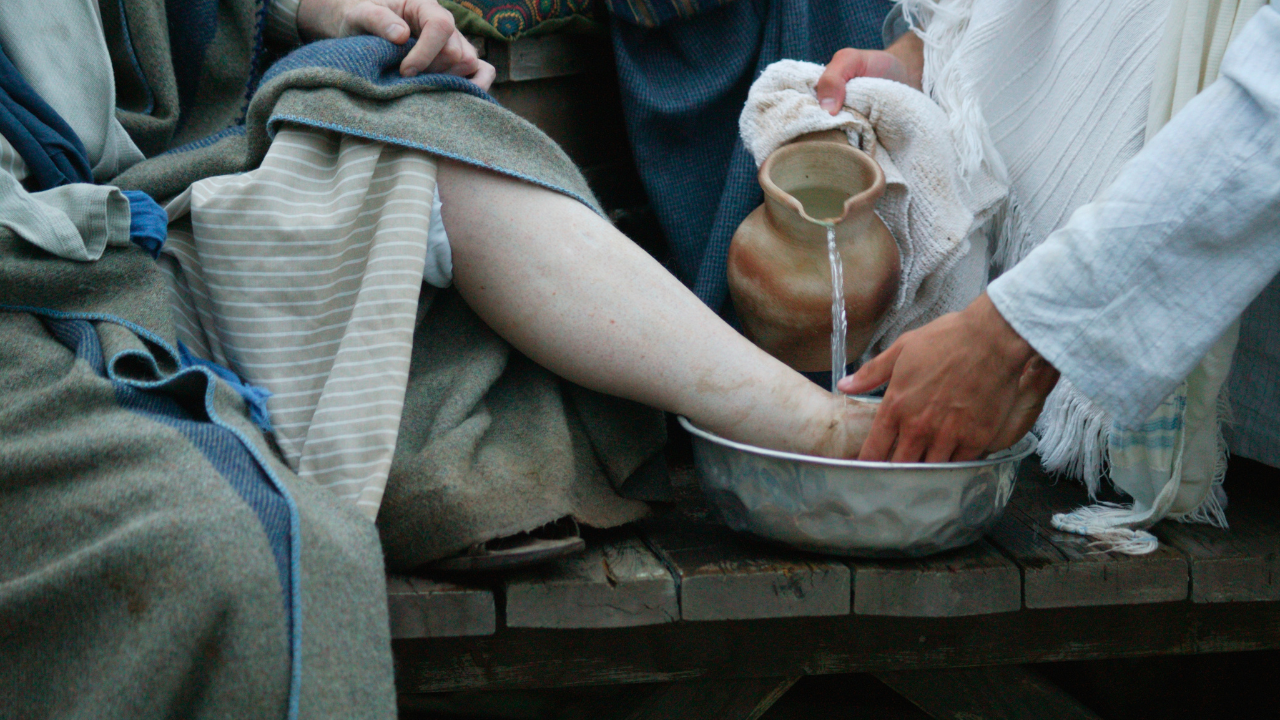
Close-up of an outstretched hand representing Jesus offering help and compassion in a white robe

Jesus Like You've Never Known Him | Part 1

Identity and mission grounding in Christ

Watch Teaching
SEO/AEO
After an Audit of the Walk the Bible site, I am missing 17 page meta tags. I need your help providing a meta title (55 ch) and a meta description (160 ch). 
Do you need the copy on those particular pages?
OK, well, here are the pages one at a time. Here's the home page and all its copy:

Helping Pastors Walk Where Jesus Walked
Scholarships that bring pastors to the land of the Bible so Scripture comes alive for the churches they lead.
GIVE A SCHOLARSHIP 
WATCH PASTOR STORIES 
EXPLORE BIBLE LANDS 
What Walk the Bible Does
Walk the Bible is a 501(c)(3) non-profit committed to helping pastors and ministers of the Gospel experience life-changing, ministry-shaping journeys to Israel—without the financial burden that would normally make the trip impossible.


We also provide trusted Biblical teaching and current, well-grounded resources that help believers better understand:


The historical roots of Scripture in Israel
The relevance of Israel in world events
God’s prophetic plan for the region


Our donors are passionate about equipping younger pastors with deeper conviction and sharper clarity through real encounters with the land of the Bible.


Trusted Leadership. Proven Experience.
✔    501(c)(3) Federal Non-Profit


✔    Every Gift is Tax-Deductible


✔    Facilitating Holy Land Tours Since 1995


✔    Trusted Holy Land Travel Partners with 40+ Years Experience


✔    Led by Pastor-Founder with 40+ Years of Church Leadership


Learn More 
You're not just funding a trip.
You're strengthening
a pastor's ministry.
Donors make it possible to:


Subsidize or fully cover travel costs
Remove financial barriers for pastors
Equip church leaders to return home with renewed passion and sharper Biblical understanding


Through your prayer and financial partnership, you help pastors:


Preach Scripture with new authority
Lead their churches with renewed vision
Mentor others from firsthand experience in the Holy Land


Hear From
Scholarship-Recipient Pastors

Joel Nafziger
“Seeing the places I’ve taught about for years makes the Word come alive.”

Watch Joel's Story

Blake Cruise
"The trip is already changing the way I read my Bible."


Watch Blake's Story

Adam Swift
"This experience will help me be a more faithful teacher of Scripture."

Watch Adam's Story


Want to learn more?
Explore Walk the Bible
Explore Our Impact
See the Mission
Discover Bible Teaching Resources
Read News from Israel
Volunteer with Us
Scholarships exist because donors believe in pastors.

And pastors change communities.
Next page: Who We Are

Who we are
Our Mission
We exist to remove financial barriers so pastors and ministers of the Gospel can experience life-changing trips to Israel and return home equipped to lead, teach, and preach Scripture with deeper clarity and conviction.

Our Beliefs
We are:

Evangelical - Scripture is God-breathed, authoritative, and without error.
Dispensational – We affirm a pre-tribulation, premillennial understanding of Biblical prophecy.
Gospel-Centered – Jesus Christ is the only means of salvation, and the message of the Gospel drives everything we do.


In short: The Bible is true. Jesus is Lord. God has a plan for Israel. Pastors should see it firsthand.

Our Founder
Bob led Grace Church in Wooster, Ohio from 1981 to 2017, serving 36 years as Senior Pastor before transitioning into the role of Pastor of Development until 2023. Since 1995, he has led hundreds on Holy Land tours throughout Israel and surrounding Biblical regions. His focus has always been discipleship—using history, geography, and archaeology to deepen faith and apply Scripture to real ministry and everyday life.


Bob has also served nationally with the Charis Fellowship of Churches for two terms and held key leadership roles with ministries that champion church planting, Christian education, and the support of families and future leaders. He hosts the weekday radio segment Minute with the Master and authored Walk the Bible in 30 Days, a devotional guide connecting believers to the land of Scripture with practical clarity.


Bob has been married to Roxanne since 1976. He is the father of two married daughters and the grandfather of six. His ministry is built on a simple conviction: the Bible is true, God has a plan for Israel, and pastors should be equipped to teach from deep study and firsthand experience.


Who We Serve
Our scholarships are designed for pastors and ministers who:


Teach the Bible faithfully
Lack the financial means to travel to Israel on their own
Are actively leading a church or ministry
Want to return home better equipped to shepherd people and explain Scripture with confidence


How Scholarships Work
Donors fund the subsidy.
Pastors apply for support.
Trips are organized through trusted travel partners with 40+ years of Holy Land experience.
Leaders travel to Israel in group formats built for Biblical teaching and spiritual application.
Pastors return home with renewed vision and sharper Biblical confidence.


We handle logistics for pastors across the U.S., including airport connections into designated departure hubs for Middle East travel.

Next page - here's the copy of the blog page before the thumbnail libary of various blogs:


Clear, grounded resources on Israel for pastors, teachers, and donors who equip them.

Israel isn’t a side chapter in Scripture. It’s the setting for most of the Bible, the birthplace of the Church, and the focal point of God’s covenant promises. World events, archaeology, and prophecy converge there more than anywhere else on earth. We report on it to add clarity, not noise.
Next page: Teaching

Biblical context from the land of Scripture. Built to equip pastors. Powered by donors who invest in the next generation.
Why Prophecy Matters
Biblical prophecy isn’t meant to confuse or divide believers—it’s meant to strengthen faith and point us to Jesus. In this series, Pastor Bob explores why God revealed the future in Scripture, how Israel fits into His unfolding plan, and what these promises mean for believers today.


Why Prophecy Matters | Part 2
God’s promises to Israel reveal His faithfulness and the prophetic significance of modern events.

Watch Teaching


Walk the Bible: On Location
What happens when you open the Bible in the very places where its events unfolded? These short devotionals were filmed on location across Israel and Greece, offering reflections from the land itself and connecting Scripture to the places where God’s story took place.


Walk the Bible: On Location | Part 1
At Jerusalem’s Garden Tomb, the resurrection reminds us that Jesus is alive and our hope is secure.

Watch Devotional


Jesus Like You've Never Known Him
The life and mission of Jesus are woven throughout the entire Bible. In this series, Pastor Bob uncovers how the Law, sacrifices, feasts, and prophecies of the Old Testament all point directly to Christ—revealing a deeper picture of who He is and what He accomplished.


Jesus Like You've Never Known Him | Part 1
Identity and mission grounding in Christ

Watch Teaching

Jesus Like You've Never Known Him | Part 2
The sacrifices of Leviticus fulfilled in Christ

Watch Teaching

Jesus Like You've Never Known Him | Part 3
The feasts of Israel revealing God’s redemptive plan

Watch Teaching


Jerusalem: Past, Present & Future
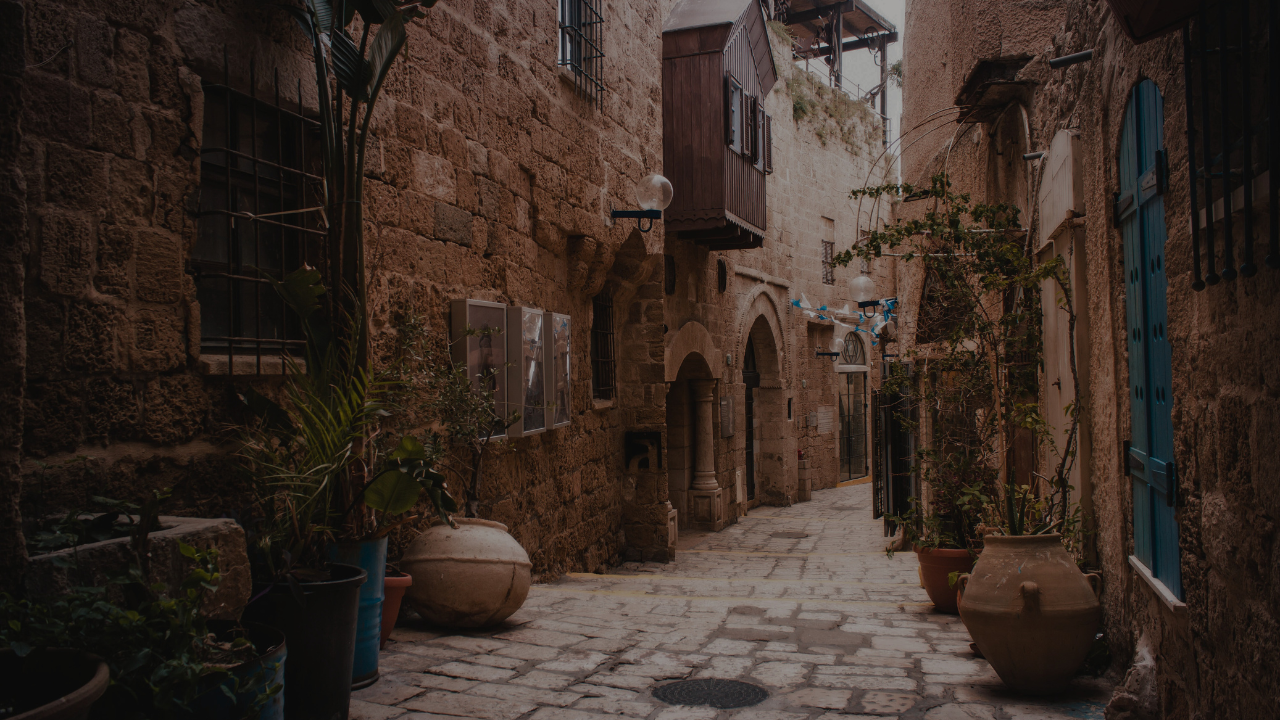
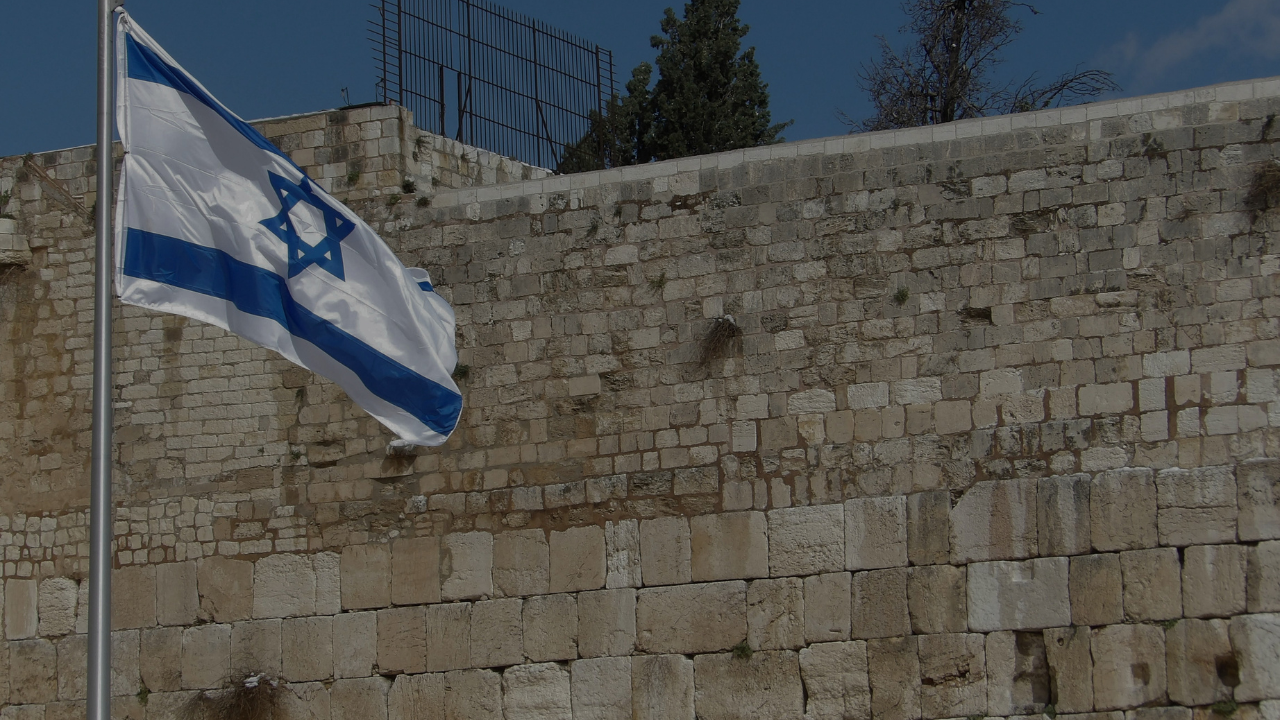
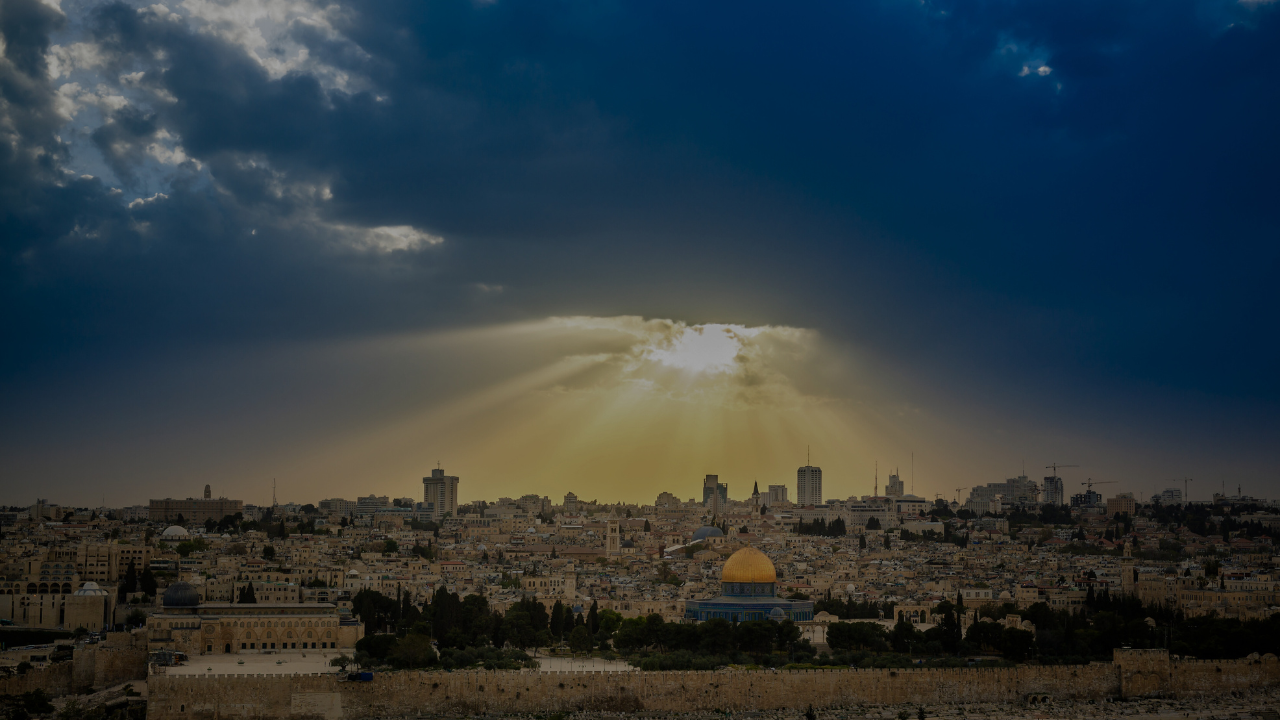
Few cities in the world carry the weight of history, faith, and prophecy like Jerusalem. This series traces the story of the city from its biblical origins to the modern day and looks ahead to the prophetic future Scripture describes for Jerusalem and the nations.
Jerusalem: Past, Present & Future | Part 1
Identity and mission grounding in Christ

Watch Teaching

Jerusalem: Past, Present & Future | Part 2
Modern Jerusalem and the visible fulfillment of Scripture

Watch Teaching

Jerusalem: Past, Present & Future | Part 3
Prophetic promises and the coming reign of Christ

Watch Teaching


More Teaching from Bob
Continue exploring Scripture through additional teaching from Pastor Bob. These standalone messages dive deeper into key biblical themes, locations, and moments—helping you better understand the world of the Bible and the story it tells.
The Kingdom of God: Jesus’ Central Message Explained
What was the primary message of Jesus during His time on earth?

Watch Teaching

The Middle East Crisis Through the Lens of Scripture
How should Christians understand the ongoing crisis in the Middle East?

Watch Teaching

Why Jerusalem Matters: The City at the Center of God’s Plan
Why does Jerusalem command so much attention from the world?

Watch Teaching


These resources are free because donors fund the work. Want to send the next pastor or expand this library? Here’s how to help:
Next Page: In the Headlines. 

At Walk the Bible, we believe understanding the land of the Bible deepens our understanding of Scripture itself. Here we share selected headlines and articles from trusted publications that highlight developments in Israel—from archaeology and biblical discoveries to cultural and current events. These stories help connect today’s world with the places where the Bible unfolded.
Next Page: Our Impact

Our Impact
When pastors walk the land of the Bible, they don’t come home the same. These scholarships helped them get there. Their stories show what God did next.

Blake Cruise
Joel Nafziger
Adam Swift
Billy Starkey
Jared Gudeman
The Kaufmans
Dan Owolabi
Tim Smith
Real Pastors. Real Trips. Real Ministry Change.
Give to Send Another Pastor 
Learn More 
What Happens When a Pastor Goes to Israel
A scholarship does more than pay for a plane ticket. It opens a pastor’s eyes to the land of Scripture, and that experience keeps showing up in:


Clearer preaching – Sermons become rooted in real places, not just abstract ideas.
Stronger confidence in the Bible – Geography, history, and archaeology reinforce what Scripture has always said.
Richer discipleship – Pastors return with stories, visuals, and applications that stick.
Renewed calling – Many describe the trip as a turning point in how they see their ministry.


"This is absolutely incredible. We're at the Garden of Gethsemane and it's one of the most beautiful places, one of the most moving places that I've ever seen. I'm really, really thankful for this trip."

- Dan Owolabi, Executive Director of Branches Worldwide


Testimonials
Each scholarshipped pastor represents a congregation, staff team, and circle of influence at home. Here are some of their stories.

I got to walk in the same places where the Bible took place — and it was like reading the Bible in color. It added a whole new depth to what I already knew, and it’s blessed my ministry.

Billy Starkey,
Grace Church
Wooster, OH
It’s already changing the way I read my Bible and think about the Lord and the apostles. It was revitalizing for my faith and my understanding of Scripture.

Blake Cruise,
Movement Church 
Hilliard, OH
Being able to physically walk where Jesus walked has been deeply and profoundly impactful on my life and ministry. It’s going to be instrumental in how I teach and preach the Scriptures.

Jared Gudeman,
Bellfountaine Grace Church
Lake Campus - Lewistown, OH
How Far One Scholarship Reaches
When you help send one pastor, your impact doesn’t stop with one person. It flows into:


Years of sermons shaped by firsthand experience
Bible studies and classes that now have real-world context
Younger leaders mentored by a pastor with renewed vision
Churches strengthened in their confidence that the Bible is true and trustworthy


One pastor’s trip can influence hundreds of people and decades of teaching.


More about us 
One Generation Equipping the Next
Most of the pastors we serve could never afford a trip like this on their own. Many are faithfully serving smaller congregations or bi-vocational roles. Our donors step in to bridge that gap.


Your giving:


Removes financial barriers
Honors years of faithful ministry
Strengthens the churches those pastors lead
Leaves a spiritual legacy that outlives you
Fund a Scholarship 
Become a Monthly Partner 
Pray With Us 
Next Page: Take Action

Send a Pastor. Strengthen a Ministry. Leave a Legacy.
Walk the Bible exists because donors choose to invest in pastors who would otherwise never see the land of Scripture firsthand. We make the path practical. You make it possible.

How to Partner
Your gift removes barriers for pastors and expands Bible teaching rooted in real places. You can:

Give a
Scholarship now
Make a single gift of any amount.

Donate Now 
Become a
Monthly Partner
No contracts. Cancel anytime. Ministry impact for decades.

Set Up a Monthly Partnership 
Discuss a Corporate Partnership
Begin a discussion with our team about helping subsidize tours for pastors.

Start a Conversation 
Volunteer Your Time
Most of what we do is powered by volunteers. If you have a skill or a few free hours, we put it to work where it helps most. Examples of volunteer fit:


Prayer teams
Social media help
Video editing
Event support
Administrative assistance
Name:
Email:
Phone:
Message:
How would you like to help? (prayer, events, admin help, media, fundraising, etc.)

Tell us your skill. We’ll match the need.

Partner Through Prayer
We ask our prayer partners to pray specifically for:


The peace of Jerusalem (Psalm 122:6)
Open hearts for the Gospel in Israel
Safety and renewal for pastors traveling
Biblical clarity for pastors returning home
God’s purposes unfolding in the region


Your name
Your Email

Stay Informed
Occasional updates on tours, teaching releases, ministry stories, and Israel prophecy developments.

Name:
Email:
Phone:
Message:
Please add me to the Walk the Bible updates list.
No spam. Just meaningful updates.

You equip pastors who equip others.

That ripple lasts for decades.

Send a Pastor to Israel 
Next page: Contact Us

We’d love to connect with you. If you have questions about our mission, resources, or how to get involved, we’re here to help. Send us a message below, and we’ll follow up with you soon.
Pasted text.txt
Document
Great! Okay, now I'm going to need meta titles and descriptions for blog posts. Here's "Why Bible Prophecy still matters today"


Should the meta title most often just be the title of the blog, as long as it fits the character limit?
Pasted text.txt
Document
Okay, I'll just proceed by giving you the title and blog article copy and let you decide:

"Why Israel still matters in God's story"


Pasted text.txt
Document
BLOG POST: "A Nation Under Threat, A People Not Forgotten"


Pasted text.txt
Document
Next blog post
Pasted text.txt
Document
Next one :


Next one: Jerusalem’s Future: The City Where God’s Story Comes to Completion
When people think about Jerusalem, they often think about the past.


Ancient walls.

Biblical stories.

Prophets and kings.


Others think about the present.


Headlines.

Politics.

Conflict.


But the Bible invites us to look somewhere else entirely.


It invites us to look forward.


Because according to Scripture, Jerusalem’s greatest chapter has not yet been written.


The Next Moment on God’s Timeline


The Bible teaches that history is not random.

God is moving the story of the world toward a conclusion.


The next major moment believers anticipate is what Scripture describes as the catching away of the church, often called the rapture.


The apostle Paul described it this way:


“The Lord himself will come down from heaven… and the dead in Christ will rise first. After that, we who are still alive… will be caught up together with them in the clouds to meet the Lord in the air.”

—1 Thessalonians 4:16-17


The word rapture isn’t used directly in the text. But the idea is clear. Believers are caught up to meet Christ.


It is a moment of reunion.

A moment of rescue.

A moment of hope.


But Scripture also tells us that difficult days follow for the world.


A Time of Turmoil


The Bible describes a future seven-year period often called the Tribulation.


During the first half of this time, a powerful world leader rises to prominence. Scripture calls him the man of lawlessness, or the Antichrist.


For a while, he brings what appears to be peace.

Jerusalem experiences a sense of stability.

The Jewish temple is rebuilt.


But halfway through this period, everything changes.


The same leader who promised peace declares himself above God. Scripture calls this moment the “abomination that causes desolation.”


It marks the beginning of a time of intense upheaval.


Conflict spreads.

Persecution increases.

The nations of the world gather against Jerusalem.


It is a dark chapter in human history.


But it is not the end of the story.


The Battle That Ends the War


The Bible describes a final confrontation known as Armageddon.


This battle takes place in northern Israel, in the Valley of Megiddo — a wide plain where armies have fought throughout history.


But this battle is different.


Because it ends the moment Jesus returns.


Scripture says Christ will defeat the forces of evil by the power of His presence alone.


The apostle Paul wrote that Jesus will overthrow the lawless one:


“With the breath of his mouth and destroy him by the splendor of his coming.”

—2 Thessalonians 2:8


Then something extraordinary happens.


According to the prophet Zechariah, Jesus will stand on the Mount of Olives, just east of Jerusalem.


And the mountain will split in two.


It is the moment when the King returns to His city.


Jerusalem in the Age to Come


After that victory, Scripture describes a thousand-year period often called the Millennium.


During this time, Jerusalem becomes the center of the world in ways never seen before.


It becomes the center of spiritual worship.

People from every nation travel there to honor the King.


It becomes the center of global leadership.

Christ rules the earth from Jerusalem.


It becomes the center of peace among nations.


The prophets described that peace in unforgettable words:


“They will beat their swords into plowshares and their spears into pruning hooks. Nation will not take up sword against nation.”

—Isaiah 2:4


War ends.


Justice reigns.


And the city that has seen so much conflict becomes a place of peace.


The City Beyond History


But even that is not the final chapter.


The Bible ends with a breathtaking promise.


One day God will create a New Jerusalem.


The apostle John described seeing it in Revelation:


“I saw the Holy City, the new Jerusalem, coming down out of heaven from God… prepared as a bride beautifully dressed for her husband.”


In that city:


God lives among His people.

Sorrow disappears.

Death is gone.


No more mourning.

No more crying.

No more pain.


The light of God fills the city itself.


And His people see Him face to face.


Why Jerusalem Still Matters


Jerusalem matters because it sits at the center of God’s story.


Abraham walked its hills.

David ruled from its throne.

Jesus was crucified and raised nearby.


And according to Scripture, Jesus will return there again.


History is moving somewhere.

God’s promises are unfolding.


And one day the city that has witnessed so much struggle will finally see its true name fulfilled.


Jerusalem.

The City of Peace.
Pasted text.txt
Document
Next one: 
Pasted text.txt
Document
Next Post: 
Pasted text.txt
Document
Next one: 
Pasted text.txt
Document
Next one: "The Messiah the Scriptures Were Waiting For


When you say this: "One high-impact AEO tweak

Add a direct-answer line near the top:"

Are you saying to tweak the text of the blog? 
Pasted text.txt
Document
Okay. Next blog article: "The Bible Comes to Life - Our First Days in Israel


Next blog: Jerusalem -A city that Fills the heart with joy.

A reflection from Pastor Bob Fetterhoff
One of the most meaningful moments of our Fall 2025 Holy Land tour came on the day we arrived in Jerusalem.


I remember sitting just outside the walls of the Old City, looking toward Jaffa Gate. From that vantage point you can see the massive stone wall stretching south and west around the ancient city. Just nearby stands the Tower of David and the Citadel Museum, and beyond that rise the spires of several churches. In the distance, you can even see the Mount of Olives.


One of the most meaningful moments of our Fall 2025 Holy Land tour came on the day we arrived in Jerusalem.


I remember sitting just outside the walls of the Old City, looking toward Jaffa Gate. From that vantage point you can see the massive stone wall stretching south and west around the ancient city. Just nearby stands the Tower of David and the Citadel Museum, and beyond that rise the spires of several churches. In the distance, you can even see the Mount of Olives.


Jerusalem has a way of stirring the heart the moment you arrive.


Every time I come here, I experience two emotions at once.


On the one hand, there is great joy. I love this land. I love walking through the places where the events of Scripture unfolded. Being here brings the Bible to life in ways that are difficult to describe.


But at the same time, there is also a deep sadness.


Jesus himself expressed that same emotion as he looked over this city from the Mount of Olives. In the Gospel of Matthew he said:


“Jerusalem, Jerusalem, you who kill the prophets and stone those sent to you, how often I have longed to gather your children together, as a hen gathers her chicks under her wings, but you were not willing.”


Jesus went on to say something sobering:


“Your house is left to you desolate.”


Those words became painfully true throughout history.


In 70 A.D., the Romans invaded and destroyed Jerusalem. Decades later, after another revolt, the city was burned again. The Roman emperor Hadrian even renamed the region Syria Palestina, intentionally removing references to Israel and the Jewish people from the name of the land.


For nearly 1,900 years, the land was known by that name.


But history took a remarkable turn in 1948, when the modern state of Israel was reborn. Since that time, the land has flourished again in extraordinary ways—agriculturally, economically, and culturally.


When you travel through Israel today, you see that renewal everywhere.


Yet Scripture reminds us that something even deeper still lies ahead.


The prophet Ezekiel describes a time when the people first return to the land, and then God gives them a new heart. In other words, the physical restoration of the land comes first, followed by a spiritual awakening.


Standing there in Jerusalem, looking at those ancient walls, that promise came to mind again.


The land has come back to life.


But the greater prayer is that the people will come to faith.


That is why Jerusalem does more than inspire admiration—it calls us to pray.


To pray for Israelis and Palestinians.

To pray for peace in the land.

And most of all, to pray for spiritual awakening.


As our group stood in Jerusalem that day, we were also mindful of the tensions and heartbreak that still affect the region. Families were grieving. Communities were waiting for loved ones to return. The realities of conflict and uncertainty remain very present in daily life.


Moments like that remind us that the deepest peace this world longs for will ultimately come only through the Prince of Peace.


Until that day, we pray.


We pray for healing.

We pray for reconciliation.

We pray that many in this land will come to know Jesus.


And for those of us who had the privilege of standing there together, that moment became a powerful reminder of why journeys like this matter.


Walking through the land of the Bible doesn’t just deepen our understanding of Scripture.


It also deepens our compassion for the people who live there today.
Pasted text.txt
Document
Next blog: Jerusalem at Night - Reflections on  Shabbat in the Holy City


Next blog post: Watching the Middle East Carefully: A Biblical Perspective on the Conflict with Iran
Robert Fetterhoff • March 11, 2026
In the past few days, the world has been watching the Middle East very carefully.


The United States and Israel have launched coordinated military strikes against targets inside Iran, dramatically escalating tensions in a region that has already been under tremendous strain for many years. News reports continue to unfold, and many people are asking the same question:


What happens next?


Whenever events like this occur, it is important for believers to step back from the noise of headlines and consider what is happening through the lens of Scripture.


An Interesting Moment on the Biblical Calendar


One of the things that immediately came to mind when these events began unfolding is the timing.


The Jewish festival of Purim is just around the corner. Purim remembers the events recorded in the book of Esther, when the Jewish people were living under Persian rule and faced a plot to destroy them.


In that story, a powerful official named Haman attempted to orchestrate the destruction of the Jewish people. Yet through the courage of Queen Esther and the unseen providence of God, the plan was overturned and the Jewish people were preserved.


Purim is ultimately a celebration of something deeper than a historical victory.


It is a reminder that God is sovereign over history.


Even when events appear chaotic or threatening, God is working behind the scenes in ways that human beings cannot always see.


A Long and Difficult History


The tensions involving Iran did not suddenly appear this week.


For more than four decades, the Iranian regime has been involved in actions that have destabilized the Middle East and threatened both Israel and Western nations. Since the revolution in 1979, conflicts, proxy wars, and terrorist activity connected to Iranian influence have affected countries throughout the region.


The military operation now unfolding is aimed at weakening the missile systems, nuclear capabilities, and military infrastructure that leaders believe could pose serious threats to Israel, American interests, and other allies in the region.


Reports from the early stages of the operation indicate that a number of significant targets inside Iran have already been struck, and the situation continues to develop.


As always in moments like this, the future remains uncertain.


How Should Believers Respond?


When world events feel unstable, it is easy for people to react with fear, anger, or speculation.


But Scripture calls believers to respond in a different way.


First, we are called to pray.


Pray for those who are in harm’s way throughout the Middle East.

Pray for innocent civilians whose lives are affected by decisions made by governments and military leaders.

Pray for wisdom for those who are making difficult decisions during these tense days.


But we also pray for something deeper.


We pray for spiritual awakening.


In recent years, there have been increasing reports that many people inside Iran are searching for spiritual truth and turning to Christ in surprising numbers. Even in the midst of political oppression and cultural pressure, the Gospel continues to spread quietly among people who are hungry for hope.


Moments of upheaval sometimes become moments when people begin asking deeper questions about life, faith, and the future.


And that is something believers can pray for with great hope.


Remember Who Holds History


Throughout Scripture, God’s people lived in a world shaped by empires, wars, and shifting political alliances.


Yet again and again, the Bible reminds us of a simple but powerful truth:


God is still in control.


Kings rise and fall. Nations change course. World events move quickly and sometimes unexpectedly.


But none of it happens outside the knowledge and sovereignty of God.


That is why believers can face uncertain times with both seriousness and hope.


We pray for peace.

We pray for protection.

And we pray that many people—throughout the Middle East and around the world—will come to know the One who alone can bring lasting peace.


Scripture reminds us that one day the Prince of Peace will reign.


Until that day, we watch carefully, we pray faithfully, and we trust that God is still at work in the unfolding story of history.

Pasted text.txt
Document
Next Blog Post: As the Middle East Tensions Rise: A Biblical Perspective on Recent Developments


Next Post: "Is the Israel-Iran War the Battle of Gog and Magog?"

Over the past several days, the world has been watching closely as tensions between Israel and Iran continue to unfold. With each new development, many are asking an important question:


Are we witnessing the fulfillment of biblical prophecy—specifically, the battle of Gog and Magog described in Ezekiel 38–39?


It’s a fair question. And it deserves a thoughtful, biblical answer.


A Growing Curiosity About Prophecy


As conflict intensifies in the Middle East, interest in Bible prophecy is rising alongside it. Pastors, scholars, and even journalists are beginning to ask whether what we are seeing today aligns with the prophetic events described in Scripture.


The battle of Gog and Magog is one of the most discussed—and often misunderstood—prophecies in the Old Testament. Found in Ezekiel chapters 38 and 39, it describes a future invasion of Israel by a coalition of nations.


But is that what we’re seeing right now?


What Ezekiel Actually Describes


Ezekiel paints a very specific picture.


Israel is invaded by a large, coordinated alliance of nations coming primarily from the north, along with forces from the east and parts of Africa. Persia—modern-day Iran—is clearly named among them.


But Persia is only one piece of a much larger coalition.


Other regions mentioned in the passage are often associated with areas that today include:


Russia and regions north of the Black Sea
Turkey
Parts of North Africa


In other words, this is not a single-nation conflict. It is a massive, unified invasion from multiple directions.


Why This War Doesn’t Fit—At Least Not Yet


While Iran is certainly involved in the current conflict, several key elements of Ezekiel’s prophecy are missing.


1. The Scale of the Coalition


Right now, the conflict is primarily centered on Israel, Iran, and limited involvement from allies. The full coalition described in Ezekiel is not yet present in any direct, unified way.


2. Israel’s Condition


Ezekiel tells us that when this future invasion happens, Israel will be:


Dwelling in safety
Living in unwalled villages
Experiencing a sense of peace and security


That is clearly not the case today.


Israel remains one of the most security-conscious nations in the world, actively defending itself on multiple fronts.


3. The Nature of the Attack


In Ezekiel’s account, Israel is overwhelmed by a sudden, massive invasion. The people cry out to God, and He intervenes dramatically—through natural and supernatural means—to deliver them.


What we are seeing today, while serious and sobering, does not match that scale or outcome.


So What Are We Seeing?


If this is not the battle of Gog and Magog, then what is it?


The best way to understand the current moment is this:


It may be a precursor. A foreshadowing. A reminder.


What is happening today reflects the trajectory Scripture describes. The nations are aligning. Tensions are increasing. Israel remains at the center of global attention—just as the Bible said it would.


But the final events described in Ezekiel have not yet fully arrived.


Why This Still Matters


Even if this is not the fulfillment of Ezekiel 38–39, it should not be dismissed.


Moments like this remind us that:


God’s Word speaks not only to the past, but also to the future
The world is not moving randomly—it is moving purposefully
What Scripture has foretold will come to pass in God’s timing


This is not a call to panic.


It is a call to pay attention.


A Personal Challenge


In times like these, it’s easy to focus entirely on headlines. But Scripture invites us to go deeper.


The Apostle Paul encouraged Timothy to be someone who “rightly divides the word of truth.” In other words, know what God’s Word actually says.


That matters now more than ever.


Because understanding Scripture:


Anchors us in uncertain times
Guards us from confusion and speculation
Points us toward hope—not fear


A Call to Prayer


Above all, this moment calls for prayer.


Pray for:


Peace in Jerusalem
Protection for innocent civilians on all sides
Believers in Iran, many of whom are quietly growing in faith under difficult conditions
Leaders and decision-makers, that wisdom would guide their actions


And pray that, even in the midst of conflict, hearts would turn toward the One who ultimately brings peace.


Final Thought


The pages of Scripture are not just history—they are also prophecy.


And while we may not be seeing the battle of Gog and Magog today, we are certainly being reminded of this truth:


God is still in control.


And His plan is still unfolding—right on schedule.
TITLE: is-iran-in-bible-prophecy-what-ezekiel-38-really-says
With everything happening in the Middle East, it’s a question many people are asking:


Are we watching Bible prophecy unfold right now?


More specifically:


Is the current conflict involving Iran the battle described in Ezekiel 38?


It’s an important question.


And it deserves a careful, Scripture-based answer.


What Ezekiel 38 Actually Says


In Ezekiel chapters 38 and 39, the Bible describes a future invasion of Israel by a coalition of nations.


Among those nations is one that is clearly identified:


Persia.


That name is significant.


Persia is the ancient name for what we now call Iran.


So there’s no question about this:


Iran is part of a prophetic picture that Scripture describes.


But that leads us to the next—and more important—question:


Is what we’re seeing today the fulfillment of that prophecy?


The Key Detail Many People Miss


To answer that, we need to pay attention to the details in the text.


Ezekiel describes a time when Israel is:


Living in the land
Gathered from many nations
And—this is critical—dwelling in safety and security


That last detail matters.


Because when this invasion takes place, the people of Israel are described as:


Living in unwalled villages
At rest
Not expecting an attack


Does That Describe Israel Today?


No.


Israel today is strong, resilient, and highly developed in its security systems.


But it is not living in a sense of peace or safety.


If anything, the opposite is true.


The nation remains on constant alert—defending itself from threats on multiple fronts.


So while the current situation is serious…


It does not match the conditions Ezekiel describes.


What We May Be Seeing Instead


If this isn’t the fulfillment of Ezekiel 38, then what is it?


The best way to understand it is this:


What we’re seeing today may be a setup—not the event itself.


We are watching:


Nations aligning in new ways
Tensions increasing
A growing desire for peace and stability in the region


All of those things matter.


Because Scripture points to a time when a sense of peace will exist…


And then be disrupted suddenly.


A Pattern to Pay Attention To


The Bible often describes future events not just by what happens—but by what leads up to them.


And one of those patterns is this:


A movement toward peace…


Followed by unexpected conflict.


That doesn’t mean we can assign a timeline.


But it does mean we should be paying attention—not with fear, but with discernment.


God’s Purpose in It All


There’s something else in Ezekiel 38 that we can’t overlook.


When this future battle takes place, God intervenes in a decisive way.


And the result is clear:


The nations recognize who He is.


Again and again in Ezekiel, God says:


“Then they will know that I am the Lord.”


That’s the ultimate purpose.


Not just geopolitical change.


But spiritual recognition.


What This Means for Israel’s Future


This passage reminds us that Israel remains central in God’s unfolding plan.


The nation’s existence today is not accidental.


Its future is not uncertain.


God has made promises.


And He will keep them.


That includes not only physical preservation…


But ultimately spiritual restoration.


How Should We Respond?


When we hear about prophecy, it’s easy to drift into one of two extremes:


Fear
Or speculation


But Scripture calls us to something better.


It calls us to:


Stay grounded in God’s Word
Avoid jumping to conclusions
And remain focused on what we know to be true


A Steady Confidence


Here’s what we can say with confidence:


Iran (Persia) is part of the biblical story—past and future
The events of today matter—but they are not the final chapter
God is still in control of what is unfolding


And perhaps most importantly:


The same God who fulfilled prophecy with precision in the past…

will do the same in the future.


Looking Ahead


As we continue this series, we’ll look at another important question:


Are we seeing the early stages of something bigger—particularly a movement toward peace that could set the stage for future events?


But for now, this is enough:


We don’t need to panic.


We don’t need to speculate.


We simply need to stay rooted in truth…


And trust the God who is writing the story.
Peace in the Middle East? What the Bible Says About “Peace and Safety”

In the midst of rising conflict, there’s another storyline that often develops alongside it:


The push for peace.


Ceasefires. Agreements. Negotiations.

Leaders stepping forward, trying to stabilize the region.


We’re seeing that again right now.


And when that happens, it raises an important biblical question:


What does Scripture say about peace in the last days?


The Tension We’re Living In


On one hand, the Middle East feels fragile.


On the other hand, there are ongoing efforts—sometimes surprising ones—to bring calm and cooperation.


That tension isn’t new.


In fact, the Bible anticipates it.


A Phrase Worth Paying Attention To


In 1 Thessalonians 5:3, we read these words:


“While people are saying, ‘Peace and safety,’ destruction will come on them suddenly…”


That verse has often been misunderstood or misused.


But it highlights a pattern.


There will be a time when people believe stability has been achieved…


And yet, that peace will prove to be temporary.


Not All Peace Is the Same


It’s important to be clear:


The Bible does not dismiss the value of peace.


We are called to pray for it.


To pursue it.


To long for it.


But Scripture also distinguishes between:


Temporary political peace
And lasting, God-established peace


What we often see in our world is the first—not the second.


Why This Matters Right Now


As conversations about peace increase—whether through diplomacy, alliances, or ceasefires—it’s easy to assume:


“Maybe this is it. Maybe things are finally settling down.”


But the Bible encourages a more measured perspective.


Not cynical.


Not dismissive.


But realistic.


The Pattern in Scripture


Throughout the Bible, we see a recurring rhythm:


Conflict rises
Peace is pursued
Stability appears
And then disruption follows


This doesn’t mean every peace agreement is prophetic.


But it does remind us:


Human efforts alone cannot produce lasting peace.


The Peace the World Can’t Create


The prophets speak of a day when true peace will come.


Not negotiated.


Not fragile.


But established by God Himself.


In Isaiah 9:6, we’re told that the Messiah will be called:


“The Prince of Peace.”


And when He reigns, peace will not depend on treaties or political will.


It will be the natural result of His rule.


Israel’s Place in That Future


This is where Israel’s future becomes especially significant.


The peace the Bible describes is not abstract.


It is centered in a place.


A people.


A promise.


Jerusalem will one day be the focal point of that peace.


Not as a city of tension…


But as the capital of a kingdom where Christ reigns.


What Should We Do in the Meantime?


So how do we respond to the current moment?


We don’t ignore efforts toward peace.


We don’t dismiss them.


But we also don’t place our hope in them.


Instead, we are called to:


Pray for peace in the Middle East
Pray for wisdom for leaders
Pray for protection over innocent lives


And above all:


Remember where true peace comes from


A Different Kind of Stability


There’s a stability available to us even when the world feels uncertain.


Not because everything around us is resolved…


But because we know the One who ultimately brings resolution.


Looking Ahead


In the next post, we’ll step back and ask a bigger question:


What is God doing in all of this?


How do current events fit into the larger story of Scripture—and what should that mean for our lives today?


For now, hold onto this:


Peace may come and go in this world.


But the peace God promises…


is still ahead—and it will not fail.
Is God at Work in All of This? Seeing Current Events Through a Biblical Lens

When events unfold as quickly and dramatically as they have in recent days, it’s natural to ask:


What is really going on?


Is this just politics?

Just history repeating itself?

Or is there something more?


For those who take Scripture seriously, that question matters.


Because the Bible doesn’t just tell us what has happened.


It also helps us understand what is happening—and where things are going.


A World That Feels Unstable


If you step back for a moment, it’s hard to ignore the sense that things are shifting.


Tensions in the Middle East
Rising global uncertainty
Increasing hostility toward Israel
A growing sense that the world is more fragile than it used to be


None of this feels random.


And according to the Bible, it isn’t.


God Is Not Reacting—He Is Reigning


One of the most important truths Scripture gives us is this:


God is not reacting to world events.

He is ruling over them.


In Daniel 4:35, we’re reminded:


“He does as He pleases with the powers of heaven and the peoples of the earth.”


That means nothing we’re witnessing is outside His awareness.


Nothing is outside His authority.


And nothing is outside His plan.


Prophecy Is Not Meant to Create Panic


When people hear words like “prophecy” or “end times,” they often think of fear, speculation, or wild predictions.


But that’s not the purpose of biblical prophecy.


Prophecy is not given to scare us.


It’s given to steady us.


Jesus Himself said in Matthew 24 that there would be:


Wars
Rumors of wars
Nations rising against nations


But He also made something clear:


“See to it that you are not alarmed.”


In other words, these things are not signs that God has lost control.


They are reminders that He is carrying out His plan.


Israel at the Center of the Story


One of the clearest ways to understand current events is to recognize this:


Israel is not just another nation in the news.


Israel sits at the center of God’s redemptive plan.


That’s why:


It remains the focus of global attention
It is often surrounded by conflict
And it continues to be a point of tension among nations


The prophet Zechariah described a future where Jerusalem would become:


“a cup of trembling to all the surrounding peoples.”


That language feels strikingly relevant today.


What We’re Seeing Right Now


So what should we make of the current moment?


We should be careful not to overstate things.


Not every conflict is the fulfillment of a specific prophecy.


Not every headline maps directly to a biblical event.


But at the same time, we shouldn’t ignore the bigger picture.


What we are seeing may very well be:


A continued movement toward the conditions Scripture describes.


Not the final chapter…


But part of the unfolding story.


The Bigger Perspective


The Bible tells a long story.


A story that includes:


Creation
Rebellion
Redemption
And ultimately restoration


And at the center of that story is Jesus Christ.


Everything we see in our world today fits somewhere within that larger narrative.


Even when we don’t understand all the details.


What This Means for Us


So how should we respond?


Not with fear.


Not with speculation.


But with clarity and conviction.


We are called to:


Stay grounded in Scripture
Keep a steady perspective
Avoid being swept up in every headline


And most importantly:


Keep our trust in the God who is writing the story


A Personal Question


Moments like this also bring the conversation closer to home.


Because it’s one thing to ask:


“What is happening in the world?”


It’s another to ask:


“Where do I stand in God’s story?”


The Bible doesn’t just describe global events.


It calls each of us to respond personally.


Looking Ahead


In the final post of this series, we’ll bring it all together with a simple but important focus:


How should we live in times like these?


What does faithfulness look like when the world feels uncertain?


For now, remember this:


The world may feel unpredictable.


But God’s plan is not.


And the more we understand His Word…


the more steady our hearts will be.
How Should We Live in Times Like These? A Clear Response in Uncertain Days

By now, many people are asking the same questions:


What is happening in our world?

Where is all of this going?

And how should we respond?


We’ve looked at the events.

We’ve considered what Scripture says.

Now the question becomes personal:


How should we live in times like these?


It Starts with Perspective


When the world feels unstable, our instinct is often to react.


To worry.

To speculate.

To search for certainty in the headlines.


But Scripture calls us to something different.


It calls us to live from a steady foundation, not a shifting one.


A Question Worth Asking


The apostle Peter asked a question that feels especially relevant right now.


In 2 Peter 3:11, he writes:


“Since everything will be destroyed in this way, what kind of people ought you to be?”


That’s the right question.


Not just:


“What’s happening out there?”


But:


“Who should I be in light of it?”


1. Live with Spiritual Clarity


Moments like this remind us that the world is not permanent.


It is moving toward a conclusion that God has already defined.


That doesn’t mean we disengage from life.


It means we live with eternal awareness.


We take God’s Word seriously
We understand the times
We don’t get swept up in confusion


Clarity comes when we anchor ourselves in truth.


2. Live with Confidence, Not Fear


Fear thrives in uncertainty.


But for those who know Christ, uncertainty does not equal instability.


Because our confidence is not in circumstances.


It is in God.


As Proverbs 3:5–6 reminds us:


“Trust in the Lord with all your heart… and He will make your paths straight.”


You may not know what’s coming next.


But you can know the One who does.


3. Live with Urgency


There is a sense in which moments like this should wake us up.


Not to panic—but to purpose.


The message of the gospel has never been more relevant.


People are searching.


Wondering.


Questioning.


And that creates opportunity.


An opportunity to:


Share truth
Offer hope
Point people to Christ


The “keys of the kingdom” are not abstract.


They are the message of the gospel—able to transform lives even in uncertain times.


4. Live with Compassion


It’s easy to view global events from a distance.


But behind every headline are real people.


Families.

Communities.

Lives disrupted by conflict and uncertainty.


Scripture calls us to respond with compassion.


To pray:


For innocent civilians
For those in harm’s way
For both Israelis and Palestinians
For people across the Middle East


And ultimately:


To pray for spiritual awakening.


5. Live with Hope


This is where everything comes together.


Because the Bible does not end with conflict.


It ends with restoration.


A coming kingdom.


A future where Jesus Christ reigns.


The prophet Isaiah describes a day when:


“Nation will not take up sword against nation, nor will they train for war anymore.”


That day is still ahead.


And Israel will be central to that future.


Jerusalem will not always be a place of tension.


It will one day be the center of peace under the rule of Christ.


A Final Thought


The world may feel uncertain.


But your life doesn’t have to be.


Because when your trust is in Christ:


Your foundation is secure
Your purpose is clear
And your future is certain


The Real Invitation

So as you watch the news…


As you follow the developments…


Don’t just ask what it all means for the world.


Ask what it means for you.


Because ultimately, the most important question is not about global events.


It’s this:


Is Christ ruling and reigning in your life today?


Looking Forward

The story God is writing is not finished.


And one day, it will lead to a kingdom where:


Peace is permanent
Justice is complete
And Christ reigns as King


Until then…


We live faithfully.

We pray consistently.

And we trust completely.


Because even in uncertain times—

God is still in control.

Why Understanding Israel Changes How You Read the Bible

In moments like these—when headlines are filled with conflict in the Middle East—it’s natural to ask a deeper question:


What does the Bible actually say about all of this?


For many Christians, Bible prophecy can feel distant, complicated, or even optional. But the truth is, it’s anything but.


You Can’t Ignore What God Emphasizes


If we’re going to take Scripture seriously, we can’t skip over the parts that are harder to understand.


At the time it was written, nearly one-third of the Bible was prophetic. While some of those prophecies have already been fulfilled, many are still pointing us forward.


That means if we want to faithfully teach—or even personally understand—the Word of God, we have to wrestle with what it says about the future.


Not out of curiosity.

But out of conviction.


Because prophecy isn’t meant to confuse us—it’s meant to prepare us.


Why Israel Is Central to the Story


Here’s where many people get tripped up.


When it comes to understanding prophecy, Israel is not a side note—it’s central.


From the promises made to Abraham…

to the words of the prophets…

to the teaching of Jesus Himself…


God’s plan consistently unfolds through the nation of Israel.


And here’s the reality:


👉 If your understanding of Israel is clear, a lot of Scripture begins to make sense.

👉 If it’s not, entire sections of the Bible become difficult to interpret.


This isn’t about politics.

It’s about properly understanding the storyline of Scripture.


God has not abandoned His purposes for Israel.

And He’s not finished yet.


A Future That’s Still Unfolding


The Bible doesn’t just tell us where we’ve been—it tells us where things are going.


Jesus Himself said He was preparing a place for us—and that He would come again.


That promise isn’t symbolic.

It’s personal.

And it’s certain.


When we study prophecy, we’re reminded that:


God is still at work
History is moving toward His purposes
And nothing happening in our world today is outside His control


That includes what we’re seeing unfold in Israel right now.


Why This Matters for Us Today


This isn’t just theology for the classroom.


It’s truth meant to shape how we live.


When we understand that God has a plan:


We don’t live in fear
We don’t get lost in speculation
We live with confidence and clarity


And we respond the way Scripture calls us to:


We pray for the peace of Jerusalem.

We stand against hatred and anti-Semitism.

We care deeply for all people in the region.

And we anchor our hope in the promises of God.


A Final Thought


Understanding Israel isn’t about picking sides in a political conversation.


It’s about recognizing that God is telling a story—and He’s still telling it.


And if we’re going to understand that story clearly…


We need to pay attention to the role Israel plays in it.


Because when we do, the Bible doesn’t become more confusing—


It becomes more alive.
Why Visiting Israel Changes Your Faith Forever

There are some experiences in life that are meaningful.


And then there are others that are transformational.


For many people, visiting Israel falls into that second category.


I’ve had the privilege of traveling to the Holy Land many times, and I can tell you this with confidence:


You don’t read the Bible the same way after you’ve walked where it happened.


The Bible Moves From Page to Place


When you open Scripture at home, you’re reading words on a page.


But when you stand in Israel, those same words take on depth, texture, and clarity.


You begin to see:


The geography behind the stories
The distances between cities
The terrain Jesus and His disciples walked


You realize that the Sea of Galilee isn’t just a name—it’s a real place, with hills rising around it just as the Gospels describe.


You see how Jerusalem sits on elevated ground…

why certain battles unfolded the way they did…

and how the setting of Scripture shapes its meaning.


The Bible doesn’t change.


But your understanding of it does.


You Begin to Feel the Weight of the Story


There’s something else that happens when you’re there.


It’s not just intellectual—it’s deeply personal.


You stand in places like:


The Mount of Olives
The Old City of Jerusalem
The region of Galilee


And you realize:


These are the places where God stepped into human history.


Where Jesus taught.

Where He healed.

Where He wept.

Where He gave His life.


And suddenly, the story of Scripture doesn’t feel distant anymore.


It feels near.


Israel Isn’t Just History—It’s Still Part of God’s Plan


One of the most striking things about being in Israel today is this:


You’re not just looking at the past.


You’re standing in a place that is still central to what God is doing in the world.


Scripture makes it clear that Israel has a future in God’s plan.


The prophets spoke of:


A regathering of the people
A restoration of the land
And ultimately, a spiritual awakening


When you travel through Israel today, you see evidence of that physical restoration everywhere.


The land is alive again.


But it also reminds you of something deeper still to come.


And that realization changes how you read the Bible—not just as history, but as a story still unfolding.


It Deepens Your Faith—and Your Compassion


One of the unexpected things many travelers experience is this:


Their faith grows…

but so does their compassion.


Because you’re not just seeing biblical locations—you’re encountering real people.


People living in a land that carries both incredible beauty and ongoing tension.


You begin to pray differently.


More specifically.

More personally.

More urgently.


You pray for peace.

You pray for healing.

You pray for hearts to turn toward Christ.


Why We Do What We Do at Walk the Bible


This is exactly why we started Walk the Bible.


Not just to teach Scripture…


But to help people experience it.


Through scholarships, we’ve been able to send pastors and Christian leaders to Israel—many of whom never thought they would have the opportunity.


And time after time, they come back saying the same thing:


“I’ll never read the Bible the same way again.”


Looking Ahead


With everything happening in the world right now, travel to Israel isn’t always predictable.


In fact, we recently had to postpone a scheduled trip.


But that doesn’t change this truth:


The opportunity to walk the land of the Bible is still one of the most powerful ways to deepen your faith.


And when the time is right, we will go again.


In fact, we’re already looking ahead to the next opportunities God has given us to return.


In 2026, we have several tours planned:


August 31 – September 9 – “Israel on a Budget”
October 6 – 15 – “The Life and Ministry of Jesus”
October 15 – 26 – “Jesus and Moses”


And in 2027, we’re planning a special, extended journey:


April 7 – 19 – “The Ultimate Holy Land Trip: Israel & Jordan” (including Petra, Mount Nebo, Bethany Beyond the Jordan, and a comprehensive journey through Israel)


Each of these trips is designed to help you not just see the land…


But to understand the Bible more clearly and experience your faith more deeply.


A Personal Invitation


If visiting Israel has ever crossed your mind, I want to encourage you:


Don’t dismiss it.


Pray about it.


Because this isn’t just a trip.


It’s an opportunity to:


See Scripture more clearly
Understand God’s plan more fully
And experience your faith in a way that stays with you for a lifetime


The Bible is already alive.


But when you walk where it happened…


you begin to see just how real it truly is.
When a Nation Stands Still: Why Holocaust Remembrance Still Matters Today

Not long ago, something remarkable happened in Israel.


For two minutes, an entire nation came to a standstill.


Sirens sounded across the country.

Cars stopped in the middle of highways.

People stepped out, stood still, and bowed their heads.


Everything paused.


That moment marked Yom HaShoah—Holocaust Remembrance Day.


A Memory That Has Not Faded


For many Jewish families, the Holocaust is not distant history.


It is personal.


Six million lives were lost—men, women, and children.

Entire families were wiped out.

Entire communities erased.


And for many still living today, those losses are not abstract—they are remembered names, faces, and stories passed down through generations.


That’s why Israel stops.


Because some things must never be forgotten.


Why Remembrance Matters


There is something deeply biblical about remembering.


Scripture repeatedly calls us to:


Remember what God has done
Remember what has been lost
Remember the consequences of evil


Yom HaShoah is not just about looking back.


It is about ensuring that the horrors of the past are not repeated in the future.


And in a world where anti-Semitism is once again on the rise, that reminder is as important as ever.


A Visit That Changes You


One of the most sobering places in Israel is Yad Vashem.


It is not a typical museum.


It is an experience that leaves you quiet… reflective… and deeply moved.


Names. Faces. Stories.


A children’s memorial that reminds us of the one million young lives lost.


It’s difficult to walk through—and impossible to forget.


And I often say this to those who travel with us:


A trip to Israel is not complete without it.


A Biblical Foundation: The Value of Life


At the heart of Holocaust remembrance is a truth found in the very first pages of the Bible.


Life is sacred.


Because life comes from God.


In Genesis, we’re told that humanity was created in the image of God—formed by His hand and given life by His breath.


That means every life carries dignity.

Every life has value.

Every life matters.


A Call to Pray—Now More Than Ever


Remembrance should lead us somewhere.


It should move us beyond reflection… into response.


Scripture calls us to pray for the peace of Jerusalem.


And in a time when tensions still affect this land and its people, that prayer is not theoretical—it is urgent.


We pray:


For Israelis and Palestinians
For protection of innocent lives
For justice where evil has been done
And ultimately, for true peace


Because the peace this world longs for will not come through politics alone—


But through the Prince of Peace.


Looking Ahead


As we remember the past, we also look to the future.


God’s promises for Israel are not finished.

His purposes are still unfolding.

And His call to His people still stands.


That includes the call to:


Remember
Pray
And stand for what is right


A Final Thought


For two minutes, an entire nation stood still.


Not because they had to.


But because they chose to remember.


And perhaps that’s something we need more of in our own lives—


Moments where we pause… reflect… and remember what truly matters.
Iran in the Bible: Why Persia Still Matters Today

When most people hear the name Iran, they think of modern headlines—conflict, tension, and uncertainty.


But the Bible tells a much longer story.


Long before Iran became a focal point in today’s news, it was known as Persia—and it played a significant role in God’s unfolding plan.


If we want to understand what’s happening in our world today, we need to understand what Scripture reveals about this nation in the past.


A Nation with Deep Biblical Roots


The Bible doesn’t treat Persia as a distant or irrelevant place. It shows up at key moments in redemptive history.


In fact, one of the most dramatic turning points in the Old Testament involves the rise of the Medes and Persians.


The prophet Daniel records the fall of Babylon—an event that had been predicted more than a century earlier by the prophet Isaiah. In a single night, the Babylonian empire collapsed, and the Medes and Persians took control.


That wasn’t just political change.


It was the fulfillment of God’s Word.


God Working Through Unexpected Leaders


One of the most remarkable aspects of Persia’s role in Scripture is how God used its leaders.


Take King Cyrus, for example.


After conquering Babylon, Cyrus issued a decree allowing the Jewish people to return to Jerusalem and rebuild the temple. He even acknowledged that his authority came from “the Lord, the God of heaven.”


Think about that.


A pagan king—outside the nation of Israel—recognized God’s hand on his life and participated in restoring God’s people.


That’s a powerful reminder:


God’s sovereignty is not limited by geography, politics, or even belief systems. He works through whomever He chooses to accomplish His purposes.


The Story of Esther: God at Work Behind the Scenes


Another key moment in Persia’s biblical history comes through the story of Esther.


A young Jewish woman, seemingly unknown and unlikely, becomes queen in the Persian empire. Through a series of events that could only be described as providential, she is positioned to save her people from destruction.


What’s fascinating about the book of Esther is this:


God’s name is never mentioned.


And yet His presence is unmistakable.


Every detail—from Esther’s rise to Mordecai’s courage to the downfall of Haman—reveals a God who is actively working behind the scenes.


That same truth still applies today.


Persia and the Bigger Story of Scripture


When we step back, we begin to see a pattern.


Persia is not just a backdrop in the Bible—it’s part of the storyline.


It was used to discipline and then restore God’s people
It became the setting for one of the greatest deliverance stories in Scripture
It served as a stage where God demonstrated His sovereignty over nations and rulers


And perhaps most importantly…


It reminds us that God is always at work—even in places we might least expect.


Why This Matters Today


So why does any of this matter now?


Because when we see Iran in the headlines, we’re not just looking at a modern political situation.


We’re looking at a region with a long history in God’s plan.


That doesn’t mean every current event directly fulfills prophecy.


But it does mean this:


Nothing happening there is outside of God’s awareness—or His control.


And that should shape how we respond.


Not with fear.


Not with speculation.


But with confidence in a God who has been working through nations like Persia for thousands of years.


Looking Ahead


The Bible doesn’t just speak about Persia in the past—it also points to the future.


There are passages in Scripture that include Persia among nations involved in events still to come.


We’ll explore that in a future post.


But for now, this is the takeaway:


The story of Iran didn’t begin with modern conflict.


And it won’t end there either.


God is still writing the story.


And He is still faithful to His purposes—especially when it comes to Israel and His plan for the nations.
The Hidden Thread: How Persia Points to Jesus

At first glance, it’s hard to imagine how ancient Persia—modern-day Iran—connects directly to the life of Jesus.


But when you follow the thread of Scripture carefully, you discover something remarkable:


God was weaving Persia into His plan long before Jesus was born.


And not just generally…


But with stunning precision.


A Decree That Changed History


Nearly 450 years before the time of Christ, a Persian king named Artaxerxes issued a decree.


It was a political decision at the time—to allow the rebuilding of Jerusalem’s walls after they had been destroyed.


That moment might seem like just another historical detail.


But the prophet Daniel had already pointed to it.


He wrote that from the time the decree would go out to restore and rebuild Jerusalem… a countdown would begin.


A Prophecy Measured in Days


Daniel described a period of “seven sevens and sixty-two sevens”—a timeline that adds up to 483 years.


But in the Jewish calendar, those years are measured in 360-day cycles.


That brings the total to 173,880 days.


And here’s where it gets remarkable.


From the exact moment of that Persian decree…


Count forward 173,880 days…


And you arrive at the very day Jesus entered Jerusalem—riding on a donkey—to begin what we now call Passion Week.


The week He would be crucified.


Not a Coincidence


Let that sink in for a moment.


A Persian king makes a decree.


A Jewish prophet records a timeline.


And centuries later, Jesus fulfills it—on the exact day.


That’s not coincidence.


That’s the precision of God’s plan.


It reminds us that history is not random.


It is directed.


The Magi: Another Persian Connection


And the connection doesn’t stop there.


When Jesus was born, who came looking for Him?


The Magi—from the East.


Most scholars believe they came from the region of ancient Persia.


They arrived in Jerusalem asking a bold question:


“Where is the one who has been born King of the Jews?”


How did they know to ask that?


Because the Jewish Scriptures had been present in that region for generations—dating back to the time of exile and Persian rule.


In other words…


The seeds of truth had been planted there long before.


And when the moment came, they recognized it.


God’s Plan Is Bigger Than One Nation


What we see in all of this is something deeply encouraging.


God’s plan was never confined to one place.


Even as He worked uniquely through Israel, He was also preparing people in other nations to recognize the Messiah when He came.


Persia—again—becomes part of that story.


A nation far from Jerusalem…


Yet still drawn into the moment when the Savior of the world arrived.


What This Means for Us


There’s something steadying about this.


In a world that often feels chaotic, Scripture reminds us:


God is not reacting. He is orchestrating.


The same God who aligned history down to the exact day of Jesus’ arrival in Jerusalem…


Is still at work today.


And What It Means for Israel’s Future


This also reinforces something we must not miss:


God’s promises to Israel are not random or symbolic.


They are precise.


They are intentional.


And they are still unfolding.


The same God who fulfilled prophecy down to the day in the first coming of Christ…


Will fulfill what He has promised for the future as well.


Including what lies ahead for Israel.


A Final Thought


When you look at the connection between Persia and Jesus, you begin to see Scripture differently.


It’s not just a collection of stories.


It’s a unified, unfolding plan.


A plan that spans centuries.


A plan that crosses nations.


A plan that leads directly to Christ.


And a plan you can trust.
Understanding Iran Today: More Than Headlines

If you’ve followed the news at all in recent months, you know that Iran is often at the center of global tension.


Missile strikes. Political threats. Regional instability.


But if we only understand Iran through headlines, we’re missing something important.


To make sense of what’s happening today, we need to look deeper—particularly at the beliefs that shape the nation’s leadership and direction.


More Than Politics


It’s easy to assume that the conflict surrounding Iran is primarily political.


In reality, much of it is deeply religious and ideological.


Iran is governed by a form of Islam known as Shiite Islam, and more specifically a branch often referred to as Twelver Shi'ism.


That matters, because beliefs shape actions.


A Key Distinction: Sunni and Shiite Islam


Within the Muslim world, there are two primary groups:


Sunni Muslims (the majority worldwide)

Shiite Muslims (a smaller percentage, but dominant in Iran)


The difference between them goes back centuries and centers on leadership and authority following the time of Muhammad.


But in Iran, the Shiite belief system has developed in a unique and influential way.


The Belief That Shapes Everything


Many within Iran’s religious leadership hold to a belief in a coming figure known as the Mahdi.


According to this belief:


The Mahdi will appear in a time of global chaos

He will establish justice

He will lead the world into a new era


For some, this belief is simply theological.


But for others—especially within more extreme circles—it becomes something more.


It can lead to the idea that chaos and conflict may actually prepare the way for that future moment.


Why This Matters


This doesn’t describe every person in Iran.


Far from it.


But it does help explain why certain actions on the global stage can feel unpredictable or even extreme.


Because they are not always driven by the same assumptions or goals that Western nations operate under.


Understanding this doesn’t mean we respond with fear.


It means we respond with clarity.


A Surprising Reality Inside Iran


At the same time, there is another story unfolding—one that doesn’t make headlines nearly as often.


There is a growing number of people in Iran who are turning to Christ.


Despite pressure, despite persecution, despite risk…


The church is growing.


Some estimates suggest that millions in Iran now identify as followers of Jesus, making it one of the fastest-growing movements of Christianity in the world today.


That’s not something human strategy can explain.


That’s the work of God.


Seeing the Bigger Picture


So what do we do with all of this?


We hold two truths at the same time:


There are real tensions, real dangers, and real ideologies at work

And there is also a real movement of God happening beneath the surface


Both are true.


And both matter.


A Biblical Perspective


Scripture reminds us that behind the events we see…


There are deeper realities at work.


Nations rise and fall.


Leaders come and go.


But God remains sovereign over it all.


And He continues to work—even in places where His name is not widely acknowledged.


How We Should Respond


Understanding leads to responsibility.


Not panic.


Not speculation.


But prayer.


Pray for those in leadership, that decisions would be restrained from evil

Pray for innocent people caught in the middle of conflict

Pray for believers in Iran, that they would be strengthened and protected

And pray that many more would come to know Christ

Looking Ahead


As we continue to watch developments unfold, it’s important to remember:


What we see today is not the whole story.


There are deeper currents—historical, spiritual, and prophetic—that are shaping the moment.


In the next post, we’ll take a closer look at one of the biggest questions people are asking:


Is Iran connected to Bible prophecy about the future?
Okay, the blog is all caught up. Now there's a section on the website builder under the SEO section called "image Alt Text" It says: "Manage all alt text tags for better SEO and accessibility across your site's displayed images. Republish your site to apply changes."

How should I write Alt Text? I just want to do this rather than give you pictures/images one-by-one because it would take too long to wait for your analysis
How's this? "Skyline of Jerusalem/Old City at Golden Hour"
Missle launched into the blue sky
Pastor and his wife in garden at golden hour
Pastor and his wife selfie at lookout location by lakefront 
Until I tell you otherwise, I'm going to be sending you my Alt Text. Give me just one recommended enhanced version of what I provided you without explaining so I can quickly highlight/copy/paste it
Pastor and wife sit on lawn snuggling their baby and each kissing their toddler on the head.
Outdoor stone hallway/path in iran with a woman walking ahead of the POV
Silhouette of young man standing at top of cliff looking out over the sea at blue hour. 
Flat lay photo of a charcutteri board willed with olives, cheeses, figs and other medditeranian foods.
Branding image of footprint with cross in center of the footprint of Walk the Bible nonprofit
Jerusalem Old City at night during Shabbat
Garden of Gethsemane as two tourists walk down the stone path
Coach Bus full of pastors traveling in Israel all waving to the POV 
Woman in jean jacket with a latte having a friend's  hand on her hand, implying prayer and support. Close up on the hands; no faces seen.
Ampitheater at Caeserea by the Sea
Group picture of pastors at the Treasury in Petra
Israel trip leader (pastor bob) standing in the water of the River Jordon with another pastor who was just baptized
Pastor bob hugging a couple who he just baptized in the Jordan River
a hand holding a golden necklace with the star of david pendant 
a close up of a woman sitting by waters with sun reflecting off teh water (out of focus) and her turing the page of her bible (the focal point)
A devout rabbinic leader talking with a pastor who is visiting the wailing wall
Bob and Roxxanne Fetterhoff smiling together at the camera in a wooded area
A pastor sitting at the bottom of the steps of the Old Jaffa Gate
Army men are set up on a world map forming two opposing sides. The side on the left has US and Israel flags. The side on the right has iran flags. Both sides have toy fighter jets.
View of the mosque on the temple mount from a hidden vantage point at sunset
Close up texture of a Israel country flag
wide shot of the wailing wall the temple mount with the dome of the rock visible. The ramp to go on the temple mount is also visible.
Wide shot of the mount of olives and the houses/neighborhoods stretching down the mountain
Pastor Bob smiling with a pastor on a boat out on the sea of galilee
Pastor Bob smiling with a pastor (Jared Gudeman) on a boat out on the sea of galilee. Both pastors are wearing sunglasses.
persia ruins featuring a statue of two horses heads with blue sky in the background
Navel ship shoots missile from it's location on the open see with blue sky framing the blast 
Close up on a book with pages fanned out, lit candles are along side it and a corked jar with fairy lights inside
Walk the Bible nonprofit logo featuring a footprint with a cross at the center along with the organization's name "Walk the Bible"
the words "do good" with the word "good" bolded. To the left of the words is a red checkmark, checking a circle
An orthodox jew and an israeli soldier gather for a photo and smile at the POV
Close up of a sheep. White woal. profile shot so you can see it's ear, eye, nose and mouth along with some of it's woally coat from lower-neck up
The Jewish Cemetery on the Mount of Olives in the middle of the day; the temple mount and skyline of jerusalem is beyond it in the background
A pastor touring the rabbinc tunnel in jerusalem
8bit design cartoon graphic of a middle eastern ancient man walking (profile view). graphic used for 404 error page and a quippy joke about content walking away and can't be found.
Black and white profile picture of Pastor Blake Cruise 
Black-and-white screen grab of Pastor Billy Starkey smiling and talking to zoom camera
Black-and-white photo of Larry and Kendra Kaufman of Grace Church in Berlin, Ohio smiling at the camera during trip to the Holy Land
Headshot of Dan Owolabi, CEO of Branches Worldwide and Owolabi Leadership
simply graphic of quotation marks
Protest supporting Iran
Hand holding magnifying glass up to hebrew scriptures. Paper looks antique
Aged paper text with twine, sage leaves and dried lavender
Aged paper rolled and tied with twine. Several of these are in the shot with one in focus
Man studying the bible and pointing to a passage on the page.
Close up on hand being offered by Jesus in white robe. Face or body not visible as it is a close up on hadn
Close-up on sandled feet representing jesus walking across sand.

Jesus Like You've Never Known Him | Part 2

The sacrifices of Leviticus fulfilled in Christ

Watch Teaching
Close-up of hands representing Jesus washing a disciple’s feet with water in a basin during biblical times

Jesus Like You've Never Known Him | Part 3

The feasts of Israel revealing God’s redemptive plan

Watch Teaching

Jesus Like You've Never Known Him | Part 4

Messianic prophecies confirming Jesus as the promised Savior

Watch Teaching

Jesus Like You've Never Known Him | Part 1

Identity and mission grounding in Christ

Watch Teaching

Jesus Like You've Never Known Him | Part 2

The sacrifices of Leviticus fulfilled in Christ

Watch Teaching

Jerusalem: Past, Present & Future

Few cities in the world carry the weight of history, faith, and prophecy like Jerusalem. This series traces the story of the city from its biblical origins to the modern day and looks ahead to the prophetic future Scripture describes for Jerusalem and the nations.

Brick-paved street through Jerusalem’s Old City in the morning light

Jerusalem: Past, Present & Future | Part 1

Identity and mission grounding in Christ

Watch Teaching
Israeli flag displayed along the ancient walls of Jerusalem’s Old City in the afternoon light

Jerusalem: Past, Present & Future | Part 2

Modern Jerusalem and the visible fulfillment of Scripture

Watch Teaching
Panoramic view of Jerusalem with the Dome of the Rock illuminated by sunlight breaking through the clouds

Jerusalem: Past, Present & Future | Part 3

Prophetic promises and the coming reign of Christ

Watch Teaching

Jerusalem: Past, Present & Future | Part 1

Identity and mission grounding in Christ

Watch Teaching

Jerusalem: Past, Present & Future | Part 2

Modern Jerusalem and the visible fulfillment of Scripture

Watch Teaching

More Teaching from Bob

Continue exploring Scripture through additional teaching from Pastor Bob. These standalone messages dive deeper into key biblical themes, locations, and moments—helping you better understand the world of the Bible and the story it tells.

Two fishing boats on the calm waters of the Sea of Galilee at sundown

The Kingdom of God: Jesus’ Central Message Explained

What was the primary message of Jesus during His time on earth?

Watch Teaching
SEO/AEO
After an Audit of the Walk the Bible site, I am missing 17 page meta tags. I need your help providing a meta title (55 ch) and a meta description (160 ch). 
Do you need the copy on those particular pages?
OK, well, here are the pages one at a time. Here's the home page and all its copy:

Helping Pastors Walk Where Jesus Walked
Scholarships that bring pastors to the land of the Bible so Scripture comes alive for the churches they lead.
GIVE A SCHOLARSHIP 
WATCH PASTOR STORIES 
EXPLORE BIBLE LANDS 
What Walk the Bible Does
Walk the Bible is a 501(c)(3) non-profit committed to helping pastors and ministers of the Gospel experience life-changing, ministry-shaping journeys to Israel—without the financial burden that would normally make the trip impossible.


We also provide trusted Biblical teaching and current, well-grounded resources that help believers better understand:


The historical roots of Scripture in Israel
The relevance of Israel in world events
God’s prophetic plan for the region


Our donors are passionate about equipping younger pastors with deeper conviction and sharper clarity through real encounters with the land of the Bible.


Trusted Leadership. Proven Experience.
✔    501(c)(3) Federal Non-Profit


✔    Every Gift is Tax-Deductible


✔    Facilitating Holy Land Tours Since 1995


✔    Trusted Holy Land Travel Partners with 40+ Years Experience


✔    Led by Pastor-Founder with 40+ Years of Church Leadership


Learn More 
You're not just funding a trip.
You're strengthening
a pastor's ministry.
Donors make it possible to:


Subsidize or fully cover travel costs
Remove financial barriers for pastors
Equip church leaders to return home with renewed passion and sharper Biblical understanding


Through your prayer and financial partnership, you help pastors:


Preach Scripture with new authority
Lead their churches with renewed vision
Mentor others from firsthand experience in the Holy Land


Hear From
Scholarship-Recipient Pastors

Joel Nafziger
“Seeing the places I’ve taught about for years makes the Word come alive.”

Watch Joel's Story

Blake Cruise
"The trip is already changing the way I read my Bible."


Watch Blake's Story

Adam Swift
"This experience will help me be a more faithful teacher of Scripture."

Watch Adam's Story


Want to learn more?
Explore Walk the Bible
Explore Our Impact
See the Mission
Discover Bible Teaching Resources
Read News from Israel
Volunteer with Us
Scholarships exist because donors believe in pastors.

And pastors change communities.
Next page: Who We Are

Who we are
Our Mission
We exist to remove financial barriers so pastors and ministers of the Gospel can experience life-changing trips to Israel and return home equipped to lead, teach, and preach Scripture with deeper clarity and conviction.

Our Beliefs
We are:

Evangelical - Scripture is God-breathed, authoritative, and without error.
Dispensational – We affirm a pre-tribulation, premillennial understanding of Biblical prophecy.
Gospel-Centered – Jesus Christ is the only means of salvation, and the message of the Gospel drives everything we do.


In short: The Bible is true. Jesus is Lord. God has a plan for Israel. Pastors should see it firsthand.

Our Founder
Bob led Grace Church in Wooster, Ohio from 1981 to 2017, serving 36 years as Senior Pastor before transitioning into the role of Pastor of Development until 2023. Since 1995, he has led hundreds on Holy Land tours throughout Israel and surrounding Biblical regions. His focus has always been discipleship—using history, geography, and archaeology to deepen faith and apply Scripture to real ministry and everyday life.


Bob has also served nationally with the Charis Fellowship of Churches for two terms and held key leadership roles with ministries that champion church planting, Christian education, and the support of families and future leaders. He hosts the weekday radio segment Minute with the Master and authored Walk the Bible in 30 Days, a devotional guide connecting believers to the land of Scripture with practical clarity.


Bob has been married to Roxanne since 1976. He is the father of two married daughters and the grandfather of six. His ministry is built on a simple conviction: the Bible is true, God has a plan for Israel, and pastors should be equipped to teach from deep study and firsthand experience.


Who We Serve
Our scholarships are designed for pastors and ministers who:


Teach the Bible faithfully
Lack the financial means to travel to Israel on their own
Are actively leading a church or ministry
Want to return home better equipped to shepherd people and explain Scripture with confidence


How Scholarships Work
Donors fund the subsidy.
Pastors apply for support.
Trips are organized through trusted travel partners with 40+ years of Holy Land experience.
Leaders travel to Israel in group formats built for Biblical teaching and spiritual application.
Pastors return home with renewed vision and sharper Biblical confidence.


We handle logistics for pastors across the U.S., including airport connections into designated departure hubs for Middle East travel.

Next page - here's the copy of the blog page before the thumbnail libary of various blogs:


Clear, grounded resources on Israel for pastors, teachers, and donors who equip them.

Israel isn’t a side chapter in Scripture. It’s the setting for most of the Bible, the birthplace of the Church, and the focal point of God’s covenant promises. World events, archaeology, and prophecy converge there more than anywhere else on earth. We report on it to add clarity, not noise.
Next page: Teaching

Biblical context from the land of Scripture. Built to equip pastors. Powered by donors who invest in the next generation.
Why Prophecy Matters
Biblical prophecy isn’t meant to confuse or divide believers—it’s meant to strengthen faith and point us to Jesus. In this series, Pastor Bob explores why God revealed the future in Scripture, how Israel fits into His unfolding plan, and what these promises mean for believers today.


Why Prophecy Matters | Part 2
God’s promises to Israel reveal His faithfulness and the prophetic significance of modern events.

Watch Teaching


Walk the Bible: On Location
What happens when you open the Bible in the very places where its events unfolded? These short devotionals were filmed on location across Israel and Greece, offering reflections from the land itself and connecting Scripture to the places where God’s story took place.


Walk the Bible: On Location | Part 1
At Jerusalem’s Garden Tomb, the resurrection reminds us that Jesus is alive and our hope is secure.

Watch Devotional


Jesus Like You've Never Known Him
The life and mission of Jesus are woven throughout the entire Bible. In this series, Pastor Bob uncovers how the Law, sacrifices, feasts, and prophecies of the Old Testament all point directly to Christ—revealing a deeper picture of who He is and what He accomplished.


Jesus Like You've Never Known Him | Part 1
Identity and mission grounding in Christ

Watch Teaching

Jesus Like You've Never Known Him | Part 2
The sacrifices of Leviticus fulfilled in Christ

Watch Teaching

Jesus Like You've Never Known Him | Part 3
The feasts of Israel revealing God’s redemptive plan

Watch Teaching


Jerusalem: Past, Present & Future
Few cities in the world carry the weight of history, faith, and prophecy like Jerusalem. This series traces the story of the city from its biblical origins to the modern day and looks ahead to the prophetic future Scripture describes for Jerusalem and the nations.


Jerusalem: Past, Present & Future | Part 1
Identity and mission grounding in Christ

Watch Teaching

Jerusalem: Past, Present & Future | Part 2
Modern Jerusalem and the visible fulfillment of Scripture

Watch Teaching

Jerusalem: Past, Present & Future | Part 3
Prophetic promises and the coming reign of Christ

Watch Teaching


More Teaching from Bob
Continue exploring Scripture through additional teaching from Pastor Bob. These standalone messages dive deeper into key biblical themes, locations, and moments—helping you better understand the world of the Bible and the story it tells.


The Kingdom of God: Jesus’ Central Message Explained
What was the primary message of Jesus during His time on earth?

Watch Teaching

The Middle East Crisis Through the Lens of Scripture
How should Christians understand the ongoing crisis in the Middle East?

Watch Teaching

Why Jerusalem Matters: The City at the Center of God’s Plan
Why does Jerusalem command so much attention from the world?

Watch Teaching


These resources are free because donors fund the work. Want to send the next pastor or expand this library? Here’s how to help:
Next Page: In the Headlines. 

At Walk the Bible, we believe understanding the land of the Bible deepens our understanding of Scripture itself. Here we share selected headlines and articles from trusted publications that highlight developments in Israel—from archaeology and biblical discoveries to cultural and current events. These stories help connect today’s world with the places where the Bible unfolded.
Next Page: Our Impact

Our Impact
When pastors walk the land of the Bible, they don’t come home the same. These scholarships helped them get there. Their stories show what God did next.

Blake Cruise
Joel Nafziger
Adam Swift
Billy Starkey
Jared Gudeman
The Kaufmans
Dan Owolabi
Tim Smith
Real Pastors. Real Trips. Real Ministry Change.
Give to Send Another Pastor 
Learn More 
What Happens When a Pastor Goes to Israel
A scholarship does more than pay for a plane ticket. It opens a pastor’s eyes to the land of Scripture, and that experience keeps showing up in:


Clearer preaching – Sermons become rooted in real places, not just abstract ideas.
Stronger confidence in the Bible – Geography, history, and archaeology reinforce what Scripture has always said.
Richer discipleship – Pastors return with stories, visuals, and applications that stick.
Renewed calling – Many describe the trip as a turning point in how they see their ministry.


"This is absolutely incredible. We're at the Garden of Gethsemane and it's one of the most beautiful places, one of the most moving places that I've ever seen. I'm really, really thankful for this trip."

- Dan Owolabi, Executive Director of Branches Worldwide


Testimonials
Each scholarshipped pastor represents a congregation, staff team, and circle of influence at home. Here are some of their stories.

I got to walk in the same places where the Bible took place — and it was like reading the Bible in color. It added a whole new depth to what I already knew, and it’s blessed my ministry.

Billy Starkey,
Grace Church
Wooster, OH
It’s already changing the way I read my Bible and think about the Lord and the apostles. It was revitalizing for my faith and my understanding of Scripture.

Blake Cruise,
Movement Church 
Hilliard, OH
Being able to physically walk where Jesus walked has been deeply and profoundly impactful on my life and ministry. It’s going to be instrumental in how I teach and preach the Scriptures.

Jared Gudeman,
Bellfountaine Grace Church
Lake Campus - Lewistown, OH
How Far One Scholarship Reaches
When you help send one pastor, your impact doesn’t stop with one person. It flows into:


Years of sermons shaped by firsthand experience
Bible studies and classes that now have real-world context
Younger leaders mentored by a pastor with renewed vision
Churches strengthened in their confidence that the Bible is true and trustworthy


One pastor’s trip can influence hundreds of people and decades of teaching.


More about us 
One Generation Equipping the Next
Most of the pastors we serve could never afford a trip like this on their own. Many are faithfully serving smaller congregations or bi-vocational roles. Our donors step in to bridge that gap.


Your giving:


Removes financial barriers
Honors years of faithful ministry
Strengthens the churches those pastors lead
Leaves a spiritual legacy that outlives you
Fund a Scholarship 
Become a Monthly Partner 
Pray With Us 
Next Page: Take Action

Send a Pastor. Strengthen a Ministry. Leave a Legacy.
Walk the Bible exists because donors choose to invest in pastors who would otherwise never see the land of Scripture firsthand. We make the path practical. You make it possible.

How to Partner
Your gift removes barriers for pastors and expands Bible teaching rooted in real places. You can:

Give a
Scholarship now
Make a single gift of any amount.

Donate Now 
Become a
Monthly Partner
No contracts. Cancel anytime. Ministry impact for decades.

Set Up a Monthly Partnership 
Discuss a Corporate Partnership
Begin a discussion with our team about helping subsidize tours for pastors.

Start a Conversation 
Volunteer Your Time
Most of what we do is powered by volunteers. If you have a skill or a few free hours, we put it to work where it helps most. Examples of volunteer fit:


Prayer teams
Social media help
Video editing
Event support
Administrative assistance
Name:
Email:
Phone:
Message:
How would you like to help? (prayer, events, admin help, media, fundraising, etc.)

Tell us your skill. We’ll match the need.

Partner Through Prayer
We ask our prayer partners to pray specifically for:


The peace of Jerusalem (Psalm 122:6)
Open hearts for the Gospel in Israel
Safety and renewal for pastors traveling
Biblical clarity for pastors returning home
God’s purposes unfolding in the region


Your name
Your Email

Stay Informed
Occasional updates on tours, teaching releases, ministry stories, and Israel prophecy developments.

Name:
Email:
Phone:
Message:
Please add me to the Walk the Bible updates list.
No spam. Just meaningful updates.

You equip pastors who equip others.

That ripple lasts for decades.

Send a Pastor to Israel 
Next page: Contact Us

We’d love to connect with you. If you have questions about our mission, resources, or how to get involved, we’re here to help. Send us a message below, and we’ll follow up with you soon.
Pasted text.txt
Document
Great! Okay, now I'm going to need meta titles and descriptions for blog posts. Here's "Why Bible Prophecy still matters today"


Should the meta title most often just be the title of the blog, as long as it fits the character limit?
Pasted text.txt
Document
Okay, I'll just proceed by giving you the title and blog article copy and let you decide:

"Why Israel still matters in God's story"


Pasted text.txt
Document
BLOG POST: "A Nation Under Threat, A People Not Forgotten"


Pasted text.txt
Document
Next blog post
Pasted text.txt
Document
Next one :


Next one: Jerusalem’s Future: The City Where God’s Story Comes to Completion
When people think about Jerusalem, they often think about the past.


Ancient walls.

Biblical stories.

Prophets and kings.


Others think about the present.


Headlines.

Politics.

Conflict.


But the Bible invites us to look somewhere else entirely.


It invites us to look forward.


Because according to Scripture, Jerusalem’s greatest chapter has not yet been written.


The Next Moment on God’s Timeline


The Bible teaches that history is not random.

God is moving the story of the world toward a conclusion.


The next major moment believers anticipate is what Scripture describes as the catching away of the church, often called the rapture.


The apostle Paul described it this way:


“The Lord himself will come down from heaven… and the dead in Christ will rise first. After that, we who are still alive… will be caught up together with them in the clouds to meet the Lord in the air.”

—1 Thessalonians 4:16-17


The word rapture isn’t used directly in the text. But the idea is clear. Believers are caught up to meet Christ.


It is a moment of reunion.

A moment of rescue.

A moment of hope.


But Scripture also tells us that difficult days follow for the world.


A Time of Turmoil


The Bible describes a future seven-year period often called the Tribulation.


During the first half of this time, a powerful world leader rises to prominence. Scripture calls him the man of lawlessness, or the Antichrist.


For a while, he brings what appears to be peace.

Jerusalem experiences a sense of stability.

The Jewish temple is rebuilt.


But halfway through this period, everything changes.


The same leader who promised peace declares himself above God. Scripture calls this moment the “abomination that causes desolation.”


It marks the beginning of a time of intense upheaval.


Conflict spreads.

Persecution increases.

The nations of the world gather against Jerusalem.


It is a dark chapter in human history.


But it is not the end of the story.


The Battle That Ends the War


The Bible describes a final confrontation known as Armageddon.


This battle takes place in northern Israel, in the Valley of Megiddo — a wide plain where armies have fought throughout history.


But this battle is different.


Because it ends the moment Jesus returns.


Scripture says Christ will defeat the forces of evil by the power of His presence alone.


The apostle Paul wrote that Jesus will overthrow the lawless one:


“With the breath of his mouth and destroy him by the splendor of his coming.”

—2 Thessalonians 2:8


Then something extraordinary happens.


According to the prophet Zechariah, Jesus will stand on the Mount of Olives, just east of Jerusalem.


And the mountain will split in two.


It is the moment when the King returns to His city.


Jerusalem in the Age to Come


After that victory, Scripture describes a thousand-year period often called the Millennium.


During this time, Jerusalem becomes the center of the world in ways never seen before.


It becomes the center of spiritual worship.

People from every nation travel there to honor the King.


It becomes the center of global leadership.

Christ rules the earth from Jerusalem.


It becomes the center of peace among nations.


The prophets described that peace in unforgettable words:


“They will beat their swords into plowshares and their spears into pruning hooks. Nation will not take up sword against nation.”

—Isaiah 2:4


War ends.


Justice reigns.


And the city that has seen so much conflict becomes a place of peace.


The City Beyond History


But even that is not the final chapter.


The Bible ends with a breathtaking promise.


One day God will create a New Jerusalem.


The apostle John described seeing it in Revelation:


“I saw the Holy City, the new Jerusalem, coming down out of heaven from God… prepared as a bride beautifully dressed for her husband.”


In that city:


God lives among His people.

Sorrow disappears.

Death is gone.


No more mourning.

No more crying.

No more pain.


The light of God fills the city itself.


And His people see Him face to face.


Why Jerusalem Still Matters


Jerusalem matters because it sits at the center of God’s story.


Abraham walked its hills.

David ruled from its throne.

Jesus was crucified and raised nearby.


And according to Scripture, Jesus will return there again.


History is moving somewhere.

God’s promises are unfolding.


And one day the city that has witnessed so much struggle will finally see its true name fulfilled.


Jerusalem.

The City of Peace.
Pasted text.txt
Document
Next one: 
Pasted text.txt
Document
Next Post: 
Pasted text.txt
Document
Next one: 
Pasted text.txt
Document
Next one: "The Messiah the Scriptures Were Waiting For


When you say this: "One high-impact AEO tweak

Add a direct-answer line near the top:"

Are you saying to tweak the text of the blog? 
Pasted text.txt
Document
Okay. Next blog article: "The Bible Comes to Life - Our First Days in Israel


Next blog: Jerusalem -A city that Fills the heart with joy.

A reflection from Pastor Bob Fetterhoff
One of the most meaningful moments of our Fall 2025 Holy Land tour came on the day we arrived in Jerusalem.


I remember sitting just outside the walls of the Old City, looking toward Jaffa Gate. From that vantage point you can see the massive stone wall stretching south and west around the ancient city. Just nearby stands the Tower of David and the Citadel Museum, and beyond that rise the spires of several churches. In the distance, you can even see the Mount of Olives.


One of the most meaningful moments of our Fall 2025 Holy Land tour came on the day we arrived in Jerusalem.


I remember sitting just outside the walls of the Old City, looking toward Jaffa Gate. From that vantage point you can see the massive stone wall stretching south and west around the ancient city. Just nearby stands the Tower of David and the Citadel Museum, and beyond that rise the spires of several churches. In the distance, you can even see the Mount of Olives.


Jerusalem has a way of stirring the heart the moment you arrive.


Every time I come here, I experience two emotions at once.


On the one hand, there is great joy. I love this land. I love walking through the places where the events of Scripture unfolded. Being here brings the Bible to life in ways that are difficult to describe.


But at the same time, there is also a deep sadness.


Jesus himself expressed that same emotion as he looked over this city from the Mount of Olives. In the Gospel of Matthew he said:


“Jerusalem, Jerusalem, you who kill the prophets and stone those sent to you, how often I have longed to gather your children together, as a hen gathers her chicks under her wings, but you were not willing.”


Jesus went on to say something sobering:


“Your house is left to you desolate.”


Those words became painfully true throughout history.


In 70 A.D., the Romans invaded and destroyed Jerusalem. Decades later, after another revolt, the city was burned again. The Roman emperor Hadrian even renamed the region Syria Palestina, intentionally removing references to Israel and the Jewish people from the name of the land.


For nearly 1,900 years, the land was known by that name.


But history took a remarkable turn in 1948, when the modern state of Israel was reborn. Since that time, the land has flourished again in extraordinary ways—agriculturally, economically, and culturally.


When you travel through Israel today, you see that renewal everywhere.


Yet Scripture reminds us that something even deeper still lies ahead.


The prophet Ezekiel describes a time when the people first return to the land, and then God gives them a new heart. In other words, the physical restoration of the land comes first, followed by a spiritual awakening.


Standing there in Jerusalem, looking at those ancient walls, that promise came to mind again.


The land has come back to life.


But the greater prayer is that the people will come to faith.


That is why Jerusalem does more than inspire admiration—it calls us to pray.


To pray for Israelis and Palestinians.

To pray for peace in the land.

And most of all, to pray for spiritual awakening.


As our group stood in Jerusalem that day, we were also mindful of the tensions and heartbreak that still affect the region. Families were grieving. Communities were waiting for loved ones to return. The realities of conflict and uncertainty remain very present in daily life.


Moments like that remind us that the deepest peace this world longs for will ultimately come only through the Prince of Peace.


Until that day, we pray.


We pray for healing.

We pray for reconciliation.

We pray that many in this land will come to know Jesus.


And for those of us who had the privilege of standing there together, that moment became a powerful reminder of why journeys like this matter.


Walking through the land of the Bible doesn’t just deepen our understanding of Scripture.


It also deepens our compassion for the people who live there today.
Pasted text.txt
Document
Next blog: Jerusalem at Night - Reflections on  Shabbat in the Holy City


Next blog post: Watching the Middle East Carefully: A Biblical Perspective on the Conflict with Iran
Robert Fetterhoff • March 11, 2026
In the past few days, the world has been watching the Middle East very carefully.


The United States and Israel have launched coordinated military strikes against targets inside Iran, dramatically escalating tensions in a region that has already been under tremendous strain for many years. News reports continue to unfold, and many people are asking the same question:


What happens next?


Whenever events like this occur, it is important for believers to step back from the noise of headlines and consider what is happening through the lens of Scripture.


An Interesting Moment on the Biblical Calendar


One of the things that immediately came to mind when these events began unfolding is the timing.


The Jewish festival of Purim is just around the corner. Purim remembers the events recorded in the book of Esther, when the Jewish people were living under Persian rule and faced a plot to destroy them.


In that story, a powerful official named Haman attempted to orchestrate the destruction of the Jewish people. Yet through the courage of Queen Esther and the unseen providence of God, the plan was overturned and the Jewish people were preserved.


Purim is ultimately a celebration of something deeper than a historical victory.


It is a reminder that God is sovereign over history.


Even when events appear chaotic or threatening, God is working behind the scenes in ways that human beings cannot always see.


A Long and Difficult History


The tensions involving Iran did not suddenly appear this week.


For more than four decades, the Iranian regime has been involved in actions that have destabilized the Middle East and threatened both Israel and Western nations. Since the revolution in 1979, conflicts, proxy wars, and terrorist activity connected to Iranian influence have affected countries throughout the region.


The military operation now unfolding is aimed at weakening the missile systems, nuclear capabilities, and military infrastructure that leaders believe could pose serious threats to Israel, American interests, and other allies in the region.


Reports from the early stages of the operation indicate that a number of significant targets inside Iran have already been struck, and the situation continues to develop.


As always in moments like this, the future remains uncertain.


How Should Believers Respond?


When world events feel unstable, it is easy for people to react with fear, anger, or speculation.


But Scripture calls believers to respond in a different way.


First, we are called to pray.


Pray for those who are in harm’s way throughout the Middle East.

Pray for innocent civilians whose lives are affected by decisions made by governments and military leaders.

Pray for wisdom for those who are making difficult decisions during these tense days.


But we also pray for something deeper.


We pray for spiritual awakening.


In recent years, there have been increasing reports that many people inside Iran are searching for spiritual truth and turning to Christ in surprising numbers. Even in the midst of political oppression and cultural pressure, the Gospel continues to spread quietly among people who are hungry for hope.


Moments of upheaval sometimes become moments when people begin asking deeper questions about life, faith, and the future.


And that is something believers can pray for with great hope.


Remember Who Holds History


Throughout Scripture, God’s people lived in a world shaped by empires, wars, and shifting political alliances.


Yet again and again, the Bible reminds us of a simple but powerful truth:


God is still in control.


Kings rise and fall. Nations change course. World events move quickly and sometimes unexpectedly.


But none of it happens outside the knowledge and sovereignty of God.


That is why believers can face uncertain times with both seriousness and hope.


We pray for peace.

We pray for protection.

And we pray that many people—throughout the Middle East and around the world—will come to know the One who alone can bring lasting peace.


Scripture reminds us that one day the Prince of Peace will reign.


Until that day, we watch carefully, we pray faithfully, and we trust that God is still at work in the unfolding story of history.

Pasted text.txt
Document
Next Blog Post: As the Middle East Tensions Rise: A Biblical Perspective on Recent Developments


Next Post: "Is the Israel-Iran War the Battle of Gog and Magog?"

Over the past several days, the world has been watching closely as tensions between Israel and Iran continue to unfold. With each new development, many are asking an important question:


Are we witnessing the fulfillment of biblical prophecy—specifically, the battle of Gog and Magog described in Ezekiel 38–39?


It’s a fair question. And it deserves a thoughtful, biblical answer.


A Growing Curiosity About Prophecy


As conflict intensifies in the Middle East, interest in Bible prophecy is rising alongside it. Pastors, scholars, and even journalists are beginning to ask whether what we are seeing today aligns with the prophetic events described in Scripture.


The battle of Gog and Magog is one of the most discussed—and often misunderstood—prophecies in the Old Testament. Found in Ezekiel chapters 38 and 39, it describes a future invasion of Israel by a coalition of nations.


But is that what we’re seeing right now?


What Ezekiel Actually Describes


Ezekiel paints a very specific picture.


Israel is invaded by a large, coordinated alliance of nations coming primarily from the north, along with forces from the east and parts of Africa. Persia—modern-day Iran—is clearly named among them.


But Persia is only one piece of a much larger coalition.


Other regions mentioned in the passage are often associated with areas that today include:


Russia and regions north of the Black Sea
Turkey
Parts of North Africa


In other words, this is not a single-nation conflict. It is a massive, unified invasion from multiple directions.


Why This War Doesn’t Fit—At Least Not Yet


While Iran is certainly involved in the current conflict, several key elements of Ezekiel’s prophecy are missing.


1. The Scale of the Coalition


Right now, the conflict is primarily centered on Israel, Iran, and limited involvement from allies. The full coalition described in Ezekiel is not yet present in any direct, unified way.


2. Israel’s Condition


Ezekiel tells us that when this future invasion happens, Israel will be:


Dwelling in safety
Living in unwalled villages
Experiencing a sense of peace and security


That is clearly not the case today.


Israel remains one of the most security-conscious nations in the world, actively defending itself on multiple fronts.


3. The Nature of the Attack


In Ezekiel’s account, Israel is overwhelmed by a sudden, massive invasion. The people cry out to God, and He intervenes dramatically—through natural and supernatural means—to deliver them.


What we are seeing today, while serious and sobering, does not match that scale or outcome.


So What Are We Seeing?


If this is not the battle of Gog and Magog, then what is it?


The best way to understand the current moment is this:


It may be a precursor. A foreshadowing. A reminder.


What is happening today reflects the trajectory Scripture describes. The nations are aligning. Tensions are increasing. Israel remains at the center of global attention—just as the Bible said it would.


But the final events described in Ezekiel have not yet fully arrived.


Why This Still Matters


Even if this is not the fulfillment of Ezekiel 38–39, it should not be dismissed.


Moments like this remind us that:


God’s Word speaks not only to the past, but also to the future
The world is not moving randomly—it is moving purposefully
What Scripture has foretold will come to pass in God’s timing


This is not a call to panic.


It is a call to pay attention.


A Personal Challenge


In times like these, it’s easy to focus entirely on headlines. But Scripture invites us to go deeper.


The Apostle Paul encouraged Timothy to be someone who “rightly divides the word of truth.” In other words, know what God’s Word actually says.


That matters now more than ever.


Because understanding Scripture:


Anchors us in uncertain times
Guards us from confusion and speculation
Points us toward hope—not fear


A Call to Prayer


Above all, this moment calls for prayer.


Pray for:


Peace in Jerusalem
Protection for innocent civilians on all sides
Believers in Iran, many of whom are quietly growing in faith under difficult conditions
Leaders and decision-makers, that wisdom would guide their actions


And pray that, even in the midst of conflict, hearts would turn toward the One who ultimately brings peace.


Final Thought


The pages of Scripture are not just history—they are also prophecy.


And while we may not be seeing the battle of Gog and Magog today, we are certainly being reminded of this truth:


God is still in control.


And His plan is still unfolding—right on schedule.
TITLE: is-iran-in-bible-prophecy-what-ezekiel-38-really-says
With everything happening in the Middle East, it’s a question many people are asking:


Are we watching Bible prophecy unfold right now?


More specifically:


Is the current conflict involving Iran the battle described in Ezekiel 38?


It’s an important question.


And it deserves a careful, Scripture-based answer.


What Ezekiel 38 Actually Says


In Ezekiel chapters 38 and 39, the Bible describes a future invasion of Israel by a coalition of nations.


Among those nations is one that is clearly identified:


Persia.


That name is significant.


Persia is the ancient name for what we now call Iran.


So there’s no question about this:


Iran is part of a prophetic picture that Scripture describes.


But that leads us to the next—and more important—question:


Is what we’re seeing today the fulfillment of that prophecy?


The Key Detail Many People Miss


To answer that, we need to pay attention to the details in the text.


Ezekiel describes a time when Israel is:


Living in the land
Gathered from many nations
And—this is critical—dwelling in safety and security


That last detail matters.


Because when this invasion takes place, the people of Israel are described as:


Living in unwalled villages
At rest
Not expecting an attack


Does That Describe Israel Today?


No.


Israel today is strong, resilient, and highly developed in its security systems.


But it is not living in a sense of peace or safety.


If anything, the opposite is true.


The nation remains on constant alert—defending itself from threats on multiple fronts.


So while the current situation is serious…


It does not match the conditions Ezekiel describes.


What We May Be Seeing Instead


If this isn’t the fulfillment of Ezekiel 38, then what is it?


The best way to understand it is this:


What we’re seeing today may be a setup—not the event itself.


We are watching:


Nations aligning in new ways
Tensions increasing
A growing desire for peace and stability in the region


All of those things matter.


Because Scripture points to a time when a sense of peace will exist…


And then be disrupted suddenly.


A Pattern to Pay Attention To


The Bible often describes future events not just by what happens—but by what leads up to them.


And one of those patterns is this:


A movement toward peace…


Followed by unexpected conflict.


That doesn’t mean we can assign a timeline.


But it does mean we should be paying attention—not with fear, but with discernment.


God’s Purpose in It All


There’s something else in Ezekiel 38 that we can’t overlook.


When this future battle takes place, God intervenes in a decisive way.


And the result is clear:


The nations recognize who He is.


Again and again in Ezekiel, God says:


“Then they will know that I am the Lord.”


That’s the ultimate purpose.


Not just geopolitical change.


But spiritual recognition.


What This Means for Israel’s Future


This passage reminds us that Israel remains central in God’s unfolding plan.


The nation’s existence today is not accidental.


Its future is not uncertain.


God has made promises.


And He will keep them.


That includes not only physical preservation…


But ultimately spiritual restoration.


How Should We Respond?


When we hear about prophecy, it’s easy to drift into one of two extremes:


Fear
Or speculation


But Scripture calls us to something better.


It calls us to:


Stay grounded in God’s Word
Avoid jumping to conclusions
And remain focused on what we know to be true


A Steady Confidence


Here’s what we can say with confidence:


Iran (Persia) is part of the biblical story—past and future
The events of today matter—but they are not the final chapter
God is still in control of what is unfolding


And perhaps most importantly:


The same God who fulfilled prophecy with precision in the past…

will do the same in the future.


Looking Ahead


As we continue this series, we’ll look at another important question:


Are we seeing the early stages of something bigger—particularly a movement toward peace that could set the stage for future events?


But for now, this is enough:


We don’t need to panic.


We don’t need to speculate.


We simply need to stay rooted in truth…


And trust the God who is writing the story.
Peace in the Middle East? What the Bible Says About “Peace and Safety”

In the midst of rising conflict, there’s another storyline that often develops alongside it:


The push for peace.


Ceasefires. Agreements. Negotiations.

Leaders stepping forward, trying to stabilize the region.


We’re seeing that again right now.


And when that happens, it raises an important biblical question:


What does Scripture say about peace in the last days?


The Tension We’re Living In


On one hand, the Middle East feels fragile.


On the other hand, there are ongoing efforts—sometimes surprising ones—to bring calm and cooperation.


That tension isn’t new.


In fact, the Bible anticipates it.


A Phrase Worth Paying Attention To


In 1 Thessalonians 5:3, we read these words:


“While people are saying, ‘Peace and safety,’ destruction will come on them suddenly…”


That verse has often been misunderstood or misused.


But it highlights a pattern.


There will be a time when people believe stability has been achieved…


And yet, that peace will prove to be temporary.


Not All Peace Is the Same


It’s important to be clear:


The Bible does not dismiss the value of peace.


We are called to pray for it.


To pursue it.


To long for it.


But Scripture also distinguishes between:


Temporary political peace
And lasting, God-established peace


What we often see in our world is the first—not the second.


Why This Matters Right Now


As conversations about peace increase—whether through diplomacy, alliances, or ceasefires—it’s easy to assume:


“Maybe this is it. Maybe things are finally settling down.”


But the Bible encourages a more measured perspective.


Not cynical.


Not dismissive.


But realistic.


The Pattern in Scripture


Throughout the Bible, we see a recurring rhythm:


Conflict rises
Peace is pursued
Stability appears
And then disruption follows


This doesn’t mean every peace agreement is prophetic.


But it does remind us:


Human efforts alone cannot produce lasting peace.


The Peace the World Can’t Create


The prophets speak of a day when true peace will come.


Not negotiated.


Not fragile.


But established by God Himself.


In Isaiah 9:6, we’re told that the Messiah will be called:


“The Prince of Peace.”


And when He reigns, peace will not depend on treaties or political will.


It will be the natural result of His rule.


Israel’s Place in That Future


This is where Israel’s future becomes especially significant.


The peace the Bible describes is not abstract.


It is centered in a place.


A people.


A promise.


Jerusalem will one day be the focal point of that peace.


Not as a city of tension…


But as the capital of a kingdom where Christ reigns.


What Should We Do in the Meantime?


So how do we respond to the current moment?


We don’t ignore efforts toward peace.


We don’t dismiss them.


But we also don’t place our hope in them.


Instead, we are called to:


Pray for peace in the Middle East
Pray for wisdom for leaders
Pray for protection over innocent lives


And above all:


Remember where true peace comes from


A Different Kind of Stability


There’s a stability available to us even when the world feels uncertain.


Not because everything around us is resolved…


But because we know the One who ultimately brings resolution.


Looking Ahead


In the next post, we’ll step back and ask a bigger question:


What is God doing in all of this?


How do current events fit into the larger story of Scripture—and what should that mean for our lives today?


For now, hold onto this:


Peace may come and go in this world.


But the peace God promises…


is still ahead—and it will not fail.
Is God at Work in All of This? Seeing Current Events Through a Biblical Lens

When events unfold as quickly and dramatically as they have in recent days, it’s natural to ask:


What is really going on?


Is this just politics?

Just history repeating itself?

Or is there something more?


For those who take Scripture seriously, that question matters.


Because the Bible doesn’t just tell us what has happened.


It also helps us understand what is happening—and where things are going.


A World That Feels Unstable


If you step back for a moment, it’s hard to ignore the sense that things are shifting.


Tensions in the Middle East
Rising global uncertainty
Increasing hostility toward Israel
A growing sense that the world is more fragile than it used to be


None of this feels random.


And according to the Bible, it isn’t.


God Is Not Reacting—He Is Reigning


One of the most important truths Scripture gives us is this:


God is not reacting to world events.

He is ruling over them.


In Daniel 4:35, we’re reminded:


“He does as He pleases with the powers of heaven and the peoples of the earth.”


That means nothing we’re witnessing is outside His awareness.


Nothing is outside His authority.


And nothing is outside His plan.


Prophecy Is Not Meant to Create Panic


When people hear words like “prophecy” or “end times,” they often think of fear, speculation, or wild predictions.


But that’s not the purpose of biblical prophecy.


Prophecy is not given to scare us.


It’s given to steady us.


Jesus Himself said in Matthew 24 that there would be:


Wars
Rumors of wars
Nations rising against nations


But He also made something clear:


“See to it that you are not alarmed.”


In other words, these things are not signs that God has lost control.


They are reminders that He is carrying out His plan.


Israel at the Center of the Story


One of the clearest ways to understand current events is to recognize this:


Israel is not just another nation in the news.


Israel sits at the center of God’s redemptive plan.


That’s why:


It remains the focus of global attention
It is often surrounded by conflict
And it continues to be a point of tension among nations


The prophet Zechariah described a future where Jerusalem would become:


“a cup of trembling to all the surrounding peoples.”


That language feels strikingly relevant today.


What We’re Seeing Right Now


So what should we make of the current moment?


We should be careful not to overstate things.


Not every conflict is the fulfillment of a specific prophecy.


Not every headline maps directly to a biblical event.


But at the same time, we shouldn’t ignore the bigger picture.


What we are seeing may very well be:


A continued movement toward the conditions Scripture describes.


Not the final chapter…


But part of the unfolding story.


The Bigger Perspective


The Bible tells a long story.


A story that includes:


Creation
Rebellion
Redemption
And ultimately restoration


And at the center of that story is Jesus Christ.


Everything we see in our world today fits somewhere within that larger narrative.


Even when we don’t understand all the details.


What This Means for Us


So how should we respond?


Not with fear.


Not with speculation.


But with clarity and conviction.


We are called to:


Stay grounded in Scripture
Keep a steady perspective
Avoid being swept up in every headline


And most importantly:


Keep our trust in the God who is writing the story


A Personal Question


Moments like this also bring the conversation closer to home.


Because it’s one thing to ask:


“What is happening in the world?”


It’s another to ask:


“Where do I stand in God’s story?”


The Bible doesn’t just describe global events.


It calls each of us to respond personally.


Looking Ahead


In the final post of this series, we’ll bring it all together with a simple but important focus:


How should we live in times like these?


What does faithfulness look like when the world feels uncertain?


For now, remember this:


The world may feel unpredictable.


But God’s plan is not.


And the more we understand His Word…


the more steady our hearts will be.
How Should We Live in Times Like These? A Clear Response in Uncertain Days

By now, many people are asking the same questions:


What is happening in our world?

Where is all of this going?

And how should we respond?


We’ve looked at the events.

We’ve considered what Scripture says.

Now the question becomes personal:


How should we live in times like these?


It Starts with Perspective


When the world feels unstable, our instinct is often to react.


To worry.

To speculate.

To search for certainty in the headlines.


But Scripture calls us to something different.


It calls us to live from a steady foundation, not a shifting one.


A Question Worth Asking


The apostle Peter asked a question that feels especially relevant right now.


In 2 Peter 3:11, he writes:


“Since everything will be destroyed in this way, what kind of people ought you to be?”


That’s the right question.


Not just:


“What’s happening out there?”


But:


“Who should I be in light of it?”


1. Live with Spiritual Clarity


Moments like this remind us that the world is not permanent.


It is moving toward a conclusion that God has already defined.


That doesn’t mean we disengage from life.


It means we live with eternal awareness.


We take God’s Word seriously
We understand the times
We don’t get swept up in confusion


Clarity comes when we anchor ourselves in truth.


2. Live with Confidence, Not Fear


Fear thrives in uncertainty.


But for those who know Christ, uncertainty does not equal instability.


Because our confidence is not in circumstances.


It is in God.


As Proverbs 3:5–6 reminds us:


“Trust in the Lord with all your heart… and He will make your paths straight.”


You may not know what’s coming next.


But you can know the One who does.


3. Live with Urgency


There is a sense in which moments like this should wake us up.


Not to panic—but to purpose.


The message of the gospel has never been more relevant.


People are searching.


Wondering.


Questioning.


And that creates opportunity.


An opportunity to:


Share truth
Offer hope
Point people to Christ


The “keys of the kingdom” are not abstract.


They are the message of the gospel—able to transform lives even in uncertain times.


4. Live with Compassion


It’s easy to view global events from a distance.


But behind every headline are real people.


Families.

Communities.

Lives disrupted by conflict and uncertainty.


Scripture calls us to respond with compassion.


To pray:


For innocent civilians
For those in harm’s way
For both Israelis and Palestinians
For people across the Middle East


And ultimately:


To pray for spiritual awakening.


5. Live with Hope


This is where everything comes together.


Because the Bible does not end with conflict.


It ends with restoration.


A coming kingdom.


A future where Jesus Christ reigns.


The prophet Isaiah describes a day when:


“Nation will not take up sword against nation, nor will they train for war anymore.”


That day is still ahead.


And Israel will be central to that future.


Jerusalem will not always be a place of tension.


It will one day be the center of peace under the rule of Christ.


A Final Thought


The world may feel uncertain.


But your life doesn’t have to be.


Because when your trust is in Christ:


Your foundation is secure
Your purpose is clear
And your future is certain


The Real Invitation

So as you watch the news…


As you follow the developments…


Don’t just ask what it all means for the world.


Ask what it means for you.


Because ultimately, the most important question is not about global events.


It’s this:


Is Christ ruling and reigning in your life today?


Looking Forward

The story God is writing is not finished.


And one day, it will lead to a kingdom where:


Peace is permanent
Justice is complete
And Christ reigns as King


Until then…


We live faithfully.

We pray consistently.

And we trust completely.


Because even in uncertain times—

God is still in control.

Why Understanding Israel Changes How You Read the Bible

In moments like these—when headlines are filled with conflict in the Middle East—it’s natural to ask a deeper question:


What does the Bible actually say about all of this?


For many Christians, Bible prophecy can feel distant, complicated, or even optional. But the truth is, it’s anything but.


You Can’t Ignore What God Emphasizes


If we’re going to take Scripture seriously, we can’t skip over the parts that are harder to understand.


At the time it was written, nearly one-third of the Bible was prophetic. While some of those prophecies have already been fulfilled, many are still pointing us forward.


That means if we want to faithfully teach—or even personally understand—the Word of God, we have to wrestle with what it says about the future.


Not out of curiosity.

But out of conviction.


Because prophecy isn’t meant to confuse us—it’s meant to prepare us.


Why Israel Is Central to the Story


Here’s where many people get tripped up.


When it comes to understanding prophecy, Israel is not a side note—it’s central.


From the promises made to Abraham…

to the words of the prophets…

to the teaching of Jesus Himself…


God’s plan consistently unfolds through the nation of Israel.


And here’s the reality:


👉 If your understanding of Israel is clear, a lot of Scripture begins to make sense.

👉 If it’s not, entire sections of the Bible become difficult to interpret.


This isn’t about politics.

It’s about properly understanding the storyline of Scripture.


God has not abandoned His purposes for Israel.

And He’s not finished yet.


A Future That’s Still Unfolding


The Bible doesn’t just tell us where we’ve been—it tells us where things are going.


Jesus Himself said He was preparing a place for us—and that He would come again.


That promise isn’t symbolic.

It’s personal.

And it’s certain.


When we study prophecy, we’re reminded that:


God is still at work
History is moving toward His purposes
And nothing happening in our world today is outside His control


That includes what we’re seeing unfold in Israel right now.


Why This Matters for Us Today


This isn’t just theology for the classroom.


It’s truth meant to shape how we live.


When we understand that God has a plan:


We don’t live in fear
We don’t get lost in speculation
We live with confidence and clarity


And we respond the way Scripture calls us to:


We pray for the peace of Jerusalem.

We stand against hatred and anti-Semitism.

We care deeply for all people in the region.

And we anchor our hope in the promises of God.


A Final Thought


Understanding Israel isn’t about picking sides in a political conversation.


It’s about recognizing that God is telling a story—and He’s still telling it.


And if we’re going to understand that story clearly…


We need to pay attention to the role Israel plays in it.


Because when we do, the Bible doesn’t become more confusing—


It becomes more alive.
Why Visiting Israel Changes Your Faith Forever

There are some experiences in life that are meaningful.


And then there are others that are transformational.


For many people, visiting Israel falls into that second category.


I’ve had the privilege of traveling to the Holy Land many times, and I can tell you this with confidence:


You don’t read the Bible the same way after you’ve walked where it happened.


The Bible Moves From Page to Place


When you open Scripture at home, you’re reading words on a page.


But when you stand in Israel, those same words take on depth, texture, and clarity.


You begin to see:


The geography behind the stories
The distances between cities
The terrain Jesus and His disciples walked


You realize that the Sea of Galilee isn’t just a name—it’s a real place, with hills rising around it just as the Gospels describe.


You see how Jerusalem sits on elevated ground…

why certain battles unfolded the way they did…

and how the setting of Scripture shapes its meaning.


The Bible doesn’t change.


But your understanding of it does.


You Begin to Feel the Weight of the Story


There’s something else that happens when you’re there.


It’s not just intellectual—it’s deeply personal.


You stand in places like:


The Mount of Olives
The Old City of Jerusalem
The region of Galilee


And you realize:


These are the places where God stepped into human history.


Where Jesus taught.

Where He healed.

Where He wept.

Where He gave His life.


And suddenly, the story of Scripture doesn’t feel distant anymore.


It feels near.


Israel Isn’t Just History—It’s Still Part of God’s Plan


One of the most striking things about being in Israel today is this:


You’re not just looking at the past.


You’re standing in a place that is still central to what God is doing in the world.


Scripture makes it clear that Israel has a future in God’s plan.


The prophets spoke of:


A regathering of the people
A restoration of the land
And ultimately, a spiritual awakening


When you travel through Israel today, you see evidence of that physical restoration everywhere.


The land is alive again.


But it also reminds you of something deeper still to come.


And that realization changes how you read the Bible—not just as history, but as a story still unfolding.


It Deepens Your Faith—and Your Compassion


One of the unexpected things many travelers experience is this:


Their faith grows…

but so does their compassion.


Because you’re not just seeing biblical locations—you’re encountering real people.


People living in a land that carries both incredible beauty and ongoing tension.


You begin to pray differently.


More specifically.

More personally.

More urgently.


You pray for peace.

You pray for healing.

You pray for hearts to turn toward Christ.


Why We Do What We Do at Walk the Bible


This is exactly why we started Walk the Bible.


Not just to teach Scripture…


But to help people experience it.


Through scholarships, we’ve been able to send pastors and Christian leaders to Israel—many of whom never thought they would have the opportunity.


And time after time, they come back saying the same thing:


“I’ll never read the Bible the same way again.”


Looking Ahead


With everything happening in the world right now, travel to Israel isn’t always predictable.


In fact, we recently had to postpone a scheduled trip.


But that doesn’t change this truth:


The opportunity to walk the land of the Bible is still one of the most powerful ways to deepen your faith.


And when the time is right, we will go again.


In fact, we’re already looking ahead to the next opportunities God has given us to return.


In 2026, we have several tours planned:


August 31 – September 9 – “Israel on a Budget”
October 6 – 15 – “The Life and Ministry of Jesus”
October 15 – 26 – “Jesus and Moses”


And in 2027, we’re planning a special, extended journey:


April 7 – 19 – “The Ultimate Holy Land Trip: Israel & Jordan” (including Petra, Mount Nebo, Bethany Beyond the Jordan, and a comprehensive journey through Israel)


Each of these trips is designed to help you not just see the land…


But to understand the Bible more clearly and experience your faith more deeply.


A Personal Invitation


If visiting Israel has ever crossed your mind, I want to encourage you:


Don’t dismiss it.


Pray about it.


Because this isn’t just a trip.


It’s an opportunity to:


See Scripture more clearly
Understand God’s plan more fully
And experience your faith in a way that stays with you for a lifetime


The Bible is already alive.


But when you walk where it happened…


you begin to see just how real it truly is.
When a Nation Stands Still: Why Holocaust Remembrance Still Matters Today

Not long ago, something remarkable happened in Israel.


For two minutes, an entire nation came to a standstill.


Sirens sounded across the country.

Cars stopped in the middle of highways.

People stepped out, stood still, and bowed their heads.


Everything paused.


That moment marked Yom HaShoah—Holocaust Remembrance Day.


A Memory That Has Not Faded


For many Jewish families, the Holocaust is not distant history.


It is personal.


Six million lives were lost—men, women, and children.

Entire families were wiped out.

Entire communities erased.


And for many still living today, those losses are not abstract—they are remembered names, faces, and stories passed down through generations.


That’s why Israel stops.


Because some things must never be forgotten.


Why Remembrance Matters


There is something deeply biblical about remembering.


Scripture repeatedly calls us to:


Remember what God has done
Remember what has been lost
Remember the consequences of evil


Yom HaShoah is not just about looking back.


It is about ensuring that the horrors of the past are not repeated in the future.


And in a world where anti-Semitism is once again on the rise, that reminder is as important as ever.


A Visit That Changes You


One of the most sobering places in Israel is Yad Vashem.


It is not a typical museum.


It is an experience that leaves you quiet… reflective… and deeply moved.


Names. Faces. Stories.


A children’s memorial that reminds us of the one million young lives lost.


It’s difficult to walk through—and impossible to forget.


And I often say this to those who travel with us:


A trip to Israel is not complete without it.


A Biblical Foundation: The Value of Life


At the heart of Holocaust remembrance is a truth found in the very first pages of the Bible.


Life is sacred.


Because life comes from God.


In Genesis, we’re told that humanity was created in the image of God—formed by His hand and given life by His breath.


That means every life carries dignity.

Every life has value.

Every life matters.


A Call to Pray—Now More Than Ever


Remembrance should lead us somewhere.


It should move us beyond reflection… into response.


Scripture calls us to pray for the peace of Jerusalem.


And in a time when tensions still affect this land and its people, that prayer is not theoretical—it is urgent.


We pray:


For Israelis and Palestinians
For protection of innocent lives
For justice where evil has been done
And ultimately, for true peace


Because the peace this world longs for will not come through politics alone—


But through the Prince of Peace.


Looking Ahead


As we remember the past, we also look to the future.


God’s promises for Israel are not finished.

His purposes are still unfolding.

And His call to His people still stands.


That includes the call to:


Remember
Pray
And stand for what is right


A Final Thought


For two minutes, an entire nation stood still.


Not because they had to.


But because they chose to remember.


And perhaps that’s something we need more of in our own lives—


Moments where we pause… reflect… and remember what truly matters.
Iran in the Bible: Why Persia Still Matters Today

When most people hear the name Iran, they think of modern headlines—conflict, tension, and uncertainty.


But the Bible tells a much longer story.


Long before Iran became a focal point in today’s news, it was known as Persia—and it played a significant role in God’s unfolding plan.


If we want to understand what’s happening in our world today, we need to understand what Scripture reveals about this nation in the past.


A Nation with Deep Biblical Roots


The Bible doesn’t treat Persia as a distant or irrelevant place. It shows up at key moments in redemptive history.


In fact, one of the most dramatic turning points in the Old Testament involves the rise of the Medes and Persians.


The prophet Daniel records the fall of Babylon—an event that had been predicted more than a century earlier by the prophet Isaiah. In a single night, the Babylonian empire collapsed, and the Medes and Persians took control.


That wasn’t just political change.


It was the fulfillment of God’s Word.


God Working Through Unexpected Leaders


One of the most remarkable aspects of Persia’s role in Scripture is how God used its leaders.


Take King Cyrus, for example.


After conquering Babylon, Cyrus issued a decree allowing the Jewish people to return to Jerusalem and rebuild the temple. He even acknowledged that his authority came from “the Lord, the God of heaven.”


Think about that.


A pagan king—outside the nation of Israel—recognized God’s hand on his life and participated in restoring God’s people.


That’s a powerful reminder:


God’s sovereignty is not limited by geography, politics, or even belief systems. He works through whomever He chooses to accomplish His purposes.


The Story of Esther: God at Work Behind the Scenes


Another key moment in Persia’s biblical history comes through the story of Esther.


A young Jewish woman, seemingly unknown and unlikely, becomes queen in the Persian empire. Through a series of events that could only be described as providential, she is positioned to save her people from destruction.


What’s fascinating about the book of Esther is this:


God’s name is never mentioned.


And yet His presence is unmistakable.


Every detail—from Esther’s rise to Mordecai’s courage to the downfall of Haman—reveals a God who is actively working behind the scenes.


That same truth still applies today.


Persia and the Bigger Story of Scripture


When we step back, we begin to see a pattern.


Persia is not just a backdrop in the Bible—it’s part of the storyline.


It was used to discipline and then restore God’s people
It became the setting for one of the greatest deliverance stories in Scripture
It served as a stage where God demonstrated His sovereignty over nations and rulers


And perhaps most importantly…


It reminds us that God is always at work—even in places we might least expect.


Why This Matters Today


So why does any of this matter now?


Because when we see Iran in the headlines, we’re not just looking at a modern political situation.


We’re looking at a region with a long history in God’s plan.


That doesn’t mean every current event directly fulfills prophecy.


But it does mean this:


Nothing happening there is outside of God’s awareness—or His control.


And that should shape how we respond.


Not with fear.


Not with speculation.


But with confidence in a God who has been working through nations like Persia for thousands of years.


Looking Ahead


The Bible doesn’t just speak about Persia in the past—it also points to the future.


There are passages in Scripture that include Persia among nations involved in events still to come.


We’ll explore that in a future post.


But for now, this is the takeaway:


The story of Iran didn’t begin with modern conflict.


And it won’t end there either.


God is still writing the story.


And He is still faithful to His purposes—especially when it comes to Israel and His plan for the nations.
The Hidden Thread: How Persia Points to Jesus

At first glance, it’s hard to imagine how ancient Persia—modern-day Iran—connects directly to the life of Jesus.


But when you follow the thread of Scripture carefully, you discover something remarkable:


God was weaving Persia into His plan long before Jesus was born.


And not just generally…


But with stunning precision.


A Decree That Changed History


Nearly 450 years before the time of Christ, a Persian king named Artaxerxes issued a decree.


It was a political decision at the time—to allow the rebuilding of Jerusalem’s walls after they had been destroyed.


That moment might seem like just another historical detail.


But the prophet Daniel had already pointed to it.


He wrote that from the time the decree would go out to restore and rebuild Jerusalem… a countdown would begin.


A Prophecy Measured in Days


Daniel described a period of “seven sevens and sixty-two sevens”—a timeline that adds up to 483 years.


But in the Jewish calendar, those years are measured in 360-day cycles.


That brings the total to 173,880 days.


And here’s where it gets remarkable.


From the exact moment of that Persian decree…


Count forward 173,880 days…


And you arrive at the very day Jesus entered Jerusalem—riding on a donkey—to begin what we now call Passion Week.


The week He would be crucified.


Not a Coincidence


Let that sink in for a moment.


A Persian king makes a decree.


A Jewish prophet records a timeline.


And centuries later, Jesus fulfills it—on the exact day.


That’s not coincidence.


That’s the precision of God’s plan.


It reminds us that history is not random.


It is directed.


The Magi: Another Persian Connection


And the connection doesn’t stop there.


When Jesus was born, who came looking for Him?


The Magi—from the East.


Most scholars believe they came from the region of ancient Persia.


They arrived in Jerusalem asking a bold question:


“Where is the one who has been born King of the Jews?”


How did they know to ask that?


Because the Jewish Scriptures had been present in that region for generations—dating back to the time of exile and Persian rule.


In other words…


The seeds of truth had been planted there long before.


And when the moment came, they recognized it.


God’s Plan Is Bigger Than One Nation


What we see in all of this is something deeply encouraging.


God’s plan was never confined to one place.


Even as He worked uniquely through Israel, He was also preparing people in other nations to recognize the Messiah when He came.


Persia—again—becomes part of that story.


A nation far from Jerusalem…


Yet still drawn into the moment when the Savior of the world arrived.


What This Means for Us


There’s something steadying about this.


In a world that often feels chaotic, Scripture reminds us:


God is not reacting. He is orchestrating.


The same God who aligned history down to the exact day of Jesus’ arrival in Jerusalem…


Is still at work today.


And What It Means for Israel’s Future


This also reinforces something we must not miss:


God’s promises to Israel are not random or symbolic.


They are precise.


They are intentional.


And they are still unfolding.


The same God who fulfilled prophecy down to the day in the first coming of Christ…


Will fulfill what He has promised for the future as well.


Including what lies ahead for Israel.


A Final Thought


When you look at the connection between Persia and Jesus, you begin to see Scripture differently.


It’s not just a collection of stories.


It’s a unified, unfolding plan.


A plan that spans centuries.


A plan that crosses nations.


A plan that leads directly to Christ.


And a plan you can trust.
Understanding Iran Today: More Than Headlines

If you’ve followed the news at all in recent months, you know that Iran is often at the center of global tension.


Missile strikes. Political threats. Regional instability.


But if we only understand Iran through headlines, we’re missing something important.


To make sense of what’s happening today, we need to look deeper—particularly at the beliefs that shape the nation’s leadership and direction.


More Than Politics


It’s easy to assume that the conflict surrounding Iran is primarily political.


In reality, much of it is deeply religious and ideological.


Iran is governed by a form of Islam known as Shiite Islam, and more specifically a branch often referred to as Twelver Shi'ism.


That matters, because beliefs shape actions.


A Key Distinction: Sunni and Shiite Islam


Within the Muslim world, there are two primary groups:


Sunni Muslims (the majority worldwide)

Shiite Muslims (a smaller percentage, but dominant in Iran)


The difference between them goes back centuries and centers on leadership and authority following the time of Muhammad.


But in Iran, the Shiite belief system has developed in a unique and influential way.


The Belief That Shapes Everything


Many within Iran’s religious leadership hold to a belief in a coming figure known as the Mahdi.


According to this belief:


The Mahdi will appear in a time of global chaos

He will establish justice

He will lead the world into a new era


For some, this belief is simply theological.


But for others—especially within more extreme circles—it becomes something more.


It can lead to the idea that chaos and conflict may actually prepare the way for that future moment.


Why This Matters


This doesn’t describe every person in Iran.


Far from it.


But it does help explain why certain actions on the global stage can feel unpredictable or even extreme.


Because they are not always driven by the same assumptions or goals that Western nations operate under.


Understanding this doesn’t mean we respond with fear.


It means we respond with clarity.


A Surprising Reality Inside Iran


At the same time, there is another story unfolding—one that doesn’t make headlines nearly as often.


There is a growing number of people in Iran who are turning to Christ.


Despite pressure, despite persecution, despite risk…


The church is growing.


Some estimates suggest that millions in Iran now identify as followers of Jesus, making it one of the fastest-growing movements of Christianity in the world today.


That’s not something human strategy can explain.


That’s the work of God.


Seeing the Bigger Picture


So what do we do with all of this?


We hold two truths at the same time:


There are real tensions, real dangers, and real ideologies at work

And there is also a real movement of God happening beneath the surface


Both are true.


And both matter.


A Biblical Perspective


Scripture reminds us that behind the events we see…


There are deeper realities at work.


Nations rise and fall.


Leaders come and go.


But God remains sovereign over it all.


And He continues to work—even in places where His name is not widely acknowledged.


How We Should Respond


Understanding leads to responsibility.


Not panic.

Motorist riding a scooter with an Israeli flag waving through the streets of Israel
Not speculation.


But prayer.


Pray for those in leadership, that decisions would be restrained from evil

Pray for innocent people caught in the middle of conflict

Pray for believers in Iran, that they would be strengthened and protected

And pray that many more would come to know Christ

Looking Ahead


As we continue to watch developments unfold, it’s important to remember:


What we see today is not the whole story.


There are deeper currents—historical, spiritual, and prophetic—that are shaping the moment.


In the next post, we’ll take a closer look at one of the biggest questions people are asking:


Is Iran connected to Bible prophecy about the future?
Okay, the blog is all caught up. Now there's a section on the website builder under the SEO section called "image Alt Text" It says: "Manage all alt text tags for better SEO and accessibility across your site's displayed images. Republish your site to apply changes."

How should I write Alt Text? I just want to do this rather than give you pictures/images one-by-one because it would take too long to wait for your analysis
How's this? "Skyline of Jerusalem/Old City at Golden Hour"
Missle launched into the blue sky
Pastor and his wife in garden at golden hour
Pastor and his wife selfie at lookout location by lakefront 
Until I tell you otherwise, I'm going to be sending you my Alt Text. Give me just one recommended enhanced version of what I provided you without explaining so I can quickly highlight/copy/paste it
Pastor and wife sit on lawn snuggling their baby and each kissing their toddler on the head.
Outdoor stone hallway/path in iran with a woman walking ahead of the POV
Silhouette of young man standing at top of cliff looking out over the sea at blue hour. 
Flat lay photo of a charcutteri board willed with olives, cheeses, figs and other medditeranian foods.
Branding image of footprint with cross in center of the footprint of Walk the Bible nonprofit
Jerusalem Old City at night during Shabbat
Garden of Gethsemane as two tourists walk down the stone path
Coach Bus full of pastors traveling in Israel all waving to the POV 
Woman in jean jacket with a latte having a friend's  hand on her hand, implying prayer and support. Close up on the hands; no faces seen.
Ampitheater at Caeserea by the Sea
Group picture of pastors at the Treasury in Petra
Israel trip leader (pastor bob) standing in the water of the River Jordon with another pastor who was just baptized
Pastor bob hugging a couple who he just baptized in the Jordan River
a hand holding a golden necklace with the star of david pendant 
a close up of a woman sitting by waters with sun reflecting off teh water (out of focus) and her turing the page of her bible (the focal point)
A devout rabbinic leader talking with a pastor who is visiting the wailing wall
Bob and Roxxanne Fetterhoff smiling together at the camera in a wooded area
A pastor sitting at the bottom of the steps of the Old Jaffa Gate
Army men are set up on a world map forming two opposing sides. The side on the left has US and Israel flags. The side on the right has iran flags. Both sides have toy fighter jets.
View of the mosque on the temple mount from a hidden vantage point at sunset
Close up texture of a Israel country flag
wide shot of the wailing wall the temple mount with the dome of the rock visible. The ramp to go on the temple mount is also visible.
Wide shot of the mount of olives and the houses/neighborhoods stretching down the mountain
Pastor Bob smiling with a pastor on a boat out on the sea of galilee
Pastor Bob smiling with a pastor (Jared Gudeman) on a boat out on the sea of galilee. Both pastors are wearing sunglasses.
persia ruins featuring a statue of two horses heads with blue sky in the background
Navel ship shoots missile from it's location on the open see with blue sky framing the blast 
Close up on a book with pages fanned out, lit candles are along side it and a corked jar with fairy lights inside
Walk the Bible nonprofit logo featuring a footprint with a cross at the center along with the organization's name "Walk the Bible"
the words "do good" with the word "good" bolded. To the left of the words is a red checkmark, checking a circle
An orthodox jew and an israeli soldier gather for a photo and smile at the POV
Close up of a sheep. White woal. profile shot so you can see it's ear, eye, nose and mouth along with some of it's woally coat from lower-neck up
The Jewish Cemetery on the Mount of Olives in the middle of the day; the temple mount and skyline of jerusalem is beyond it in the background
A pastor touring the rabbinc tunnel in jerusalem
8bit design cartoon graphic of a middle eastern ancient man walking (profile view). graphic used for 404 error page and a quippy joke about content walking away and can't be found.
Black and white profile picture of Pastor Blake Cruise 
Black-and-white screen grab of Pastor Billy Starkey smiling and talking to zoom camera
Black-and-white photo of Larry and Kendra Kaufman of Grace Church in Berlin, Ohio smiling at the camera during trip to the Holy Land
Headshot of Dan Owolabi, CEO of Branches Worldwide and Owolabi Leadership
simply graphic of quotation marks
Protest supporting Iran
Hand holding magnifying glass up to hebrew scriptures. Paper looks antique
Aged paper text with twine, sage leaves and dried lavender
Aged paper rolled and tied with twine. Several of these are in the shot with one in focus
Man studying the bible and pointing to a passage on the page.
Close up on hand being offered by Jesus in white robe. Face or body not visible as it is a close up on hadn
Close-up on sandled feet representing jesus walking across sand.
Close up on hands representing jesus pouring water from a pitcher on someone's feet and washing them in a basin. The person is also in bible-times robe/dress
Silhouette of Jesus walking up a hill at golden hour carring a cross
Still/screen grab of Pastor Bob teaching to the camera at the garden tomb in Israel
Pastor Bob reciting the sermon on the mount to tour group at Capernum
Pastor Bob walking and discussing archeology discoveries at Meggido
Pastor bob teaching in athens about Acts 17
Pastor Bob teaching at the Shepherds' fields in Bethlehem
Pastor Bob teaching At Caesarea Maritima, discover how God used one strategic city to spread the Gospel across the Roman world.
Two fishing boats on the calm waters of Sea of Galilee at sundown
A motorist on a motorized scooter with an israel flag flapping

The Middle East Crisis Through the Lens of Scripture

How should Christians understand the ongoing crisis in the Middle East?

Watch Teaching
Wide view of the Western Wall at night filled with people gathered in prayer in Jerusalem

Why Jerusalem Matters: The City at the Center of God’s Plan

Why does Jerusalem command so much attention from the world?

Watch Teaching

Will Israel Ever Know Peace? What the Bible Really Says

Will Israel ever experience lasting peace?

Watch Teaching

Israel, the End Times & the Return of Jesus

What does the Bible actually say about Israel, the end times, and the return of Jesus?

Watch Teaching

The Kingdom of God: Jesus’ Central Message Explained

What was the primary message of Jesus during His time on earth?

Watch Teaching

The Middle East Crisis Through the Lens of Scripture

How should Christians understand the ongoing crisis in the Middle East?

Watch Teaching

These resources are free because donors fund the work. Want to send the next pastor or expand this library? Here’s how to help:

Stay Informed

Occasional updates on tours, teaching releases, ministry stories, and Israel prophecy developments.

Contact Us

No spam. Just meaningful updates.