Jerusalem at Night: Reflections on Shabbat in the Holy City
Shabbat in Jerusalem offers a unique experience of rest, worship, and community, reminding believers of God’s design for rhythm, reflection, and renewal.
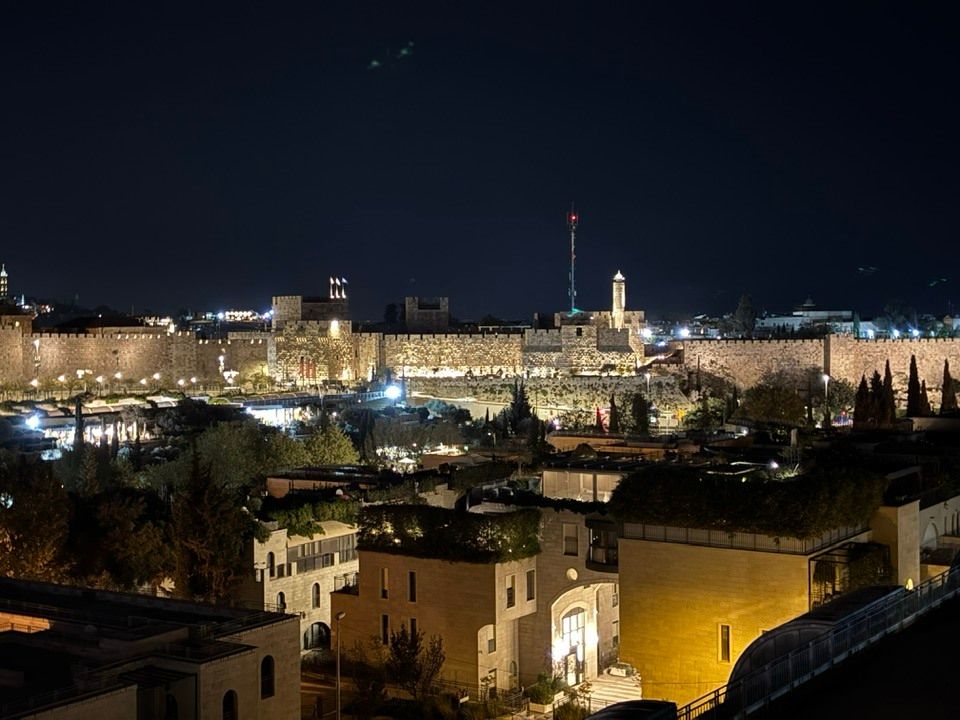
After a full day in Jerusalem, I stepped outside from my hotel room to look at the Old City—this time under the lights of night.
It was nearly eight o’clock, and the city had taken on a completely different atmosphere.
The massive walls of Jerusalem, built in the sixteenth century during the reign of Suleiman the Magnificent, were beautifully illuminated. The stone glowed softly in the evening light, wrapping around the Old City just as it has for centuries.
From where I stood near Jaffa Gate, you could follow the path of the walls as they circled the city. Moving northward you would come to the New Gate, then Damascus Gate, and further along to Herod’s Gate. Continuing around the eastern side stands St. Stephen’s Gate, often called the Lion’s Gate.
And then there is one gate that remains closed—the Golden Gate, also known as the Eastern Gate.
Jewish tradition says that when the Messiah comes, he will enter Jerusalem through that gate. Scripture does not specifically say that, but the tradition has been strong for centuries. In fact, long ago a cemetery was built in front of the gate, an attempt by some to prevent such an entrance from ever taking place.
But of course, when God accomplishes his purposes, no earthly obstacle will stand in the way.
Standing there in the evening air, looking at those ancient walls, I was reminded once again how many generations have walked this land and how deeply history is woven into every corner of Jerusalem.
Yet what made that evening especially meaningful was something happening all across the city.
It was Shabbat.
For Jewish families, Shabbat begins Friday evening and continues until sundown on Saturday. All over Jerusalem, families were gathering together for the traditional Shabbat meal.
Hotels were filled with families meeting for dinner. Grandparents, parents, children—and sometimes even great-grandparents—sat down together to share a meal that is both festive and deeply meaningful.
The food is abundant. The atmosphere is joyful. But Shabbat is about far more than a meal.
In Jewish homes, families gather around the table to pray, read Scripture, and recite traditional blessings together. It is a time intentionally set apart from the busyness of life—a time to focus on God and to enjoy being together as a family.
Years ago, I had the privilege of joining a Jewish family in Jerusalem for a Shabbat meal. It remains one of my most memorable experiences in Israel. The prayers, the readings, the sense of reverence and gratitude—it all pointed back to God’s command given long ago:
“Remember the Sabbath day by keeping it holy.”
There is something powerful about that rhythm.
In a world where many people feel they must work constantly—seven days a week, twenty-four hours a day—Scripture reminds us that we were never meant to live that way.
God built rest into the rhythm of life.
Setting aside a day to focus on the Lord, to worship, and to be with family is not merely a tradition. It is a gift.
Whether someone observes that day on Saturday, Sunday, or another day of the week, the principle remains the same: we all need time to step back, refocus our priorities, and remember the One who gives us life.
That evening in Jerusalem, as Shabbat began across the city, I was reminded again how valuable that practice is.
It restores the soul.
It reorients the heart.
And it reminds us that our lives are ultimately centered not on our work, but on our relationship with God.
As the evening came to a close, I found myself praying once again for the people of this land—for Israelis and Palestinians alike—that they might experience not only moments of rest, but the deeper peace that comes through the Prince of Peace, Jesus Christ.
Jerusalem has a way of stirring those prayers.
And for all of us who were walking the streets of the city that week, it was another reminder of how meaningful it is to experience the land of the Bible firsthand.
Ending the Journey Where Faith Meets History
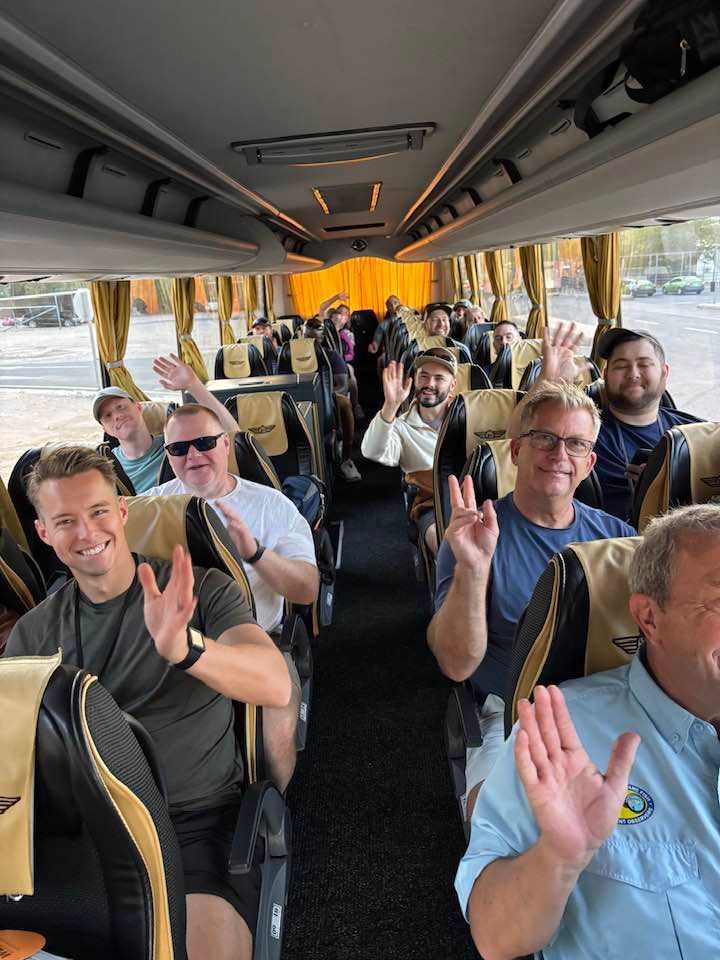
As our tour continued, we visited several of the most significant locations in and around Jerusalem.
We traveled to Bethlehem, where the Church of the Nativity marks the traditional location of Jesus’ birth. Walking through the narrow streets of the town and descending into the ancient church reminds you how humble the beginning of the Gospel story truly was.
Later we explored the Old City of Jerusalem at night, when the stone streets grow quiet and the ancient walls seem to hold centuries of prayer within them.
Our final stop together brought us to one of the most recognizable locations in the entire city: the Western Wall.
Standing there is a powerful experience. For the Jewish people, it is the closest accessible place to the site where the Temple once stood. For many visitors, it becomes a place of reflection and prayer.
Watching people gather there—some quietly praying, others placing written prayers into the stones of the wall—you are reminded that Jerusalem has always been a city where faith and history meet.
As our journey came to an end, I found myself reflecting once again on why bringing pastors and Christian leaders to Israel matters so much.
When you walk the land of the Bible, the Scriptures take on new depth.
Places you have read about for years suddenly become real locations.
Stories you have taught many times take on fresh clarity.
And the unfolding story of God’s work in history becomes more vivid.
That is why we continue to invite pastors and ministry leaders to experience this land firsthand.
Israel is more than a destination.
It is a classroom.
It is a place of reflection.
And for many, it becomes a deeply spiritual journey that strengthens their faith and their ministry.
Every time I leave the Holy Land, I carry with me the same prayer—that what we experience here will deepen our understanding of Scripture and renew our commitment to the Lord who revealed himself in this land.
And that, in the end, is what makes the journey so meaningful.